
Last updated October 15, 2026
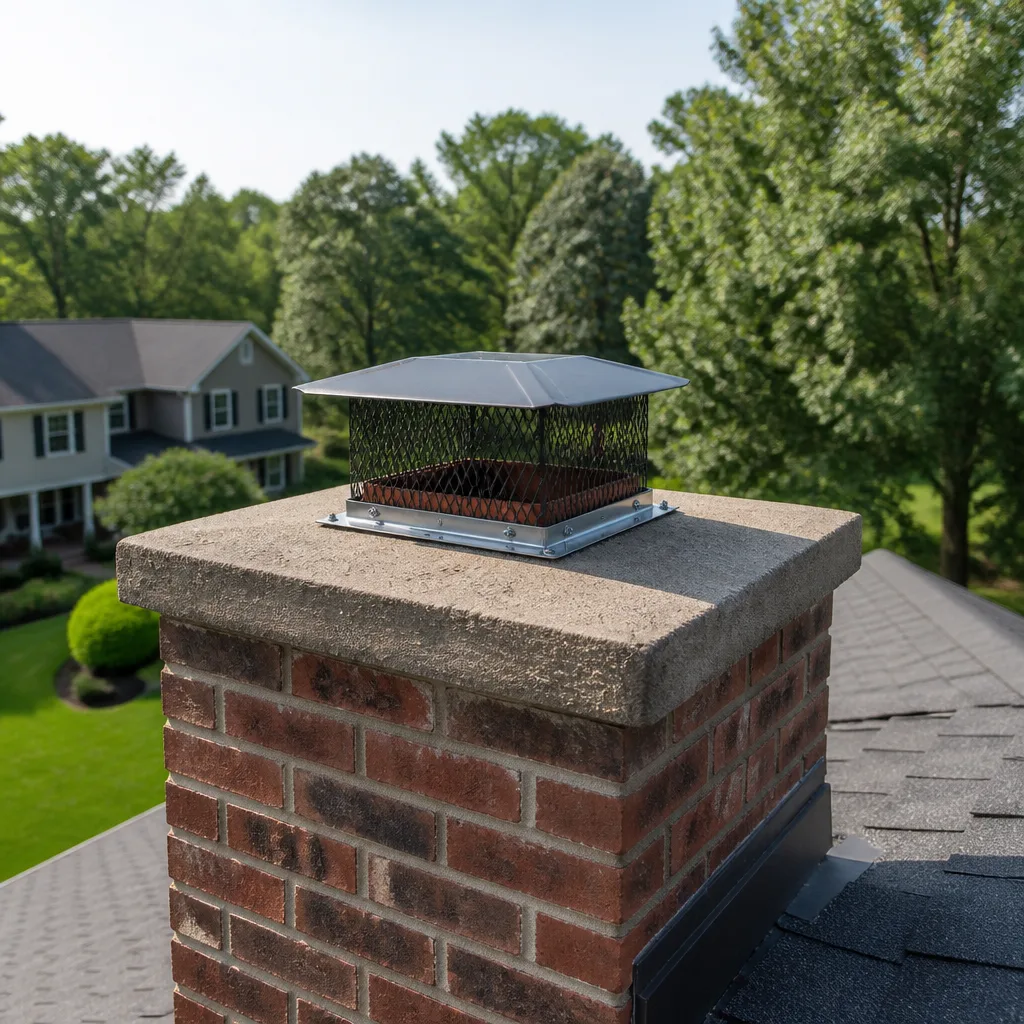 Sweep & inspection
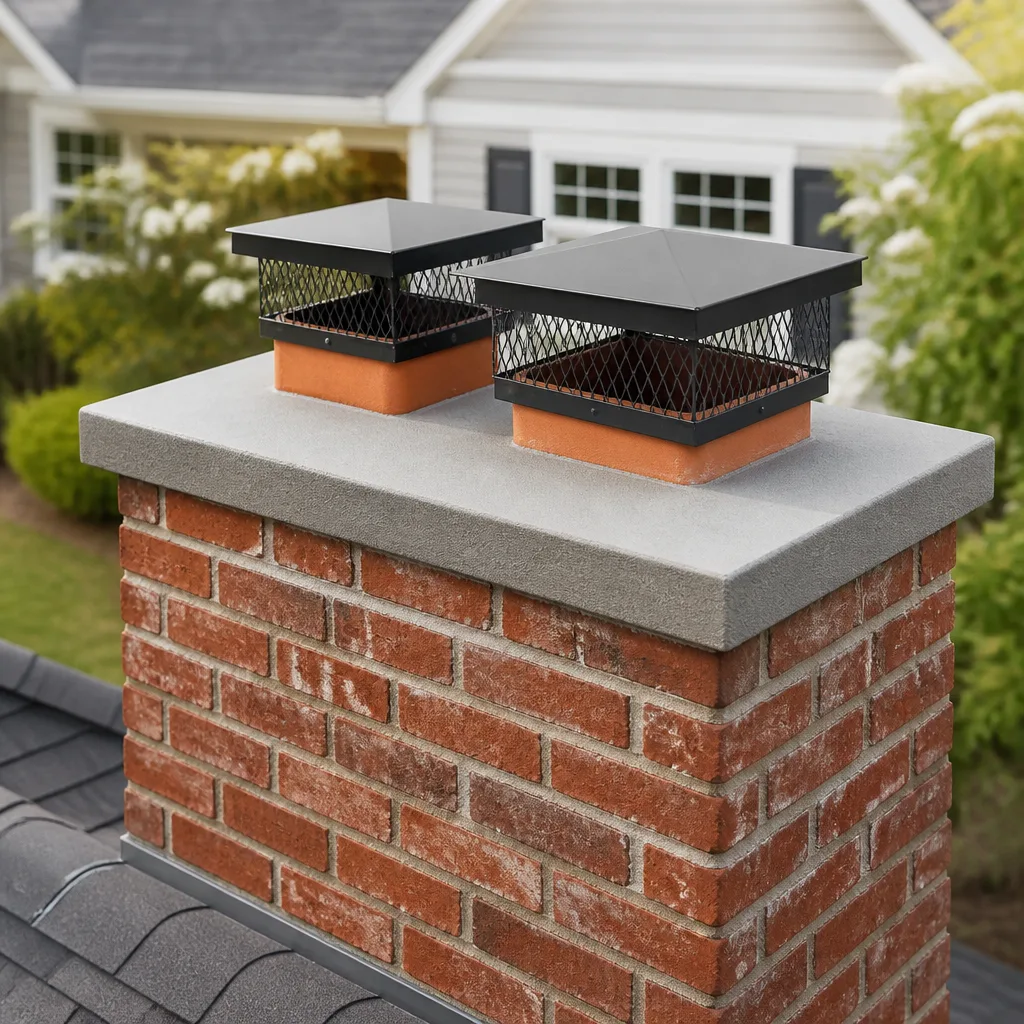 Caps & crowns
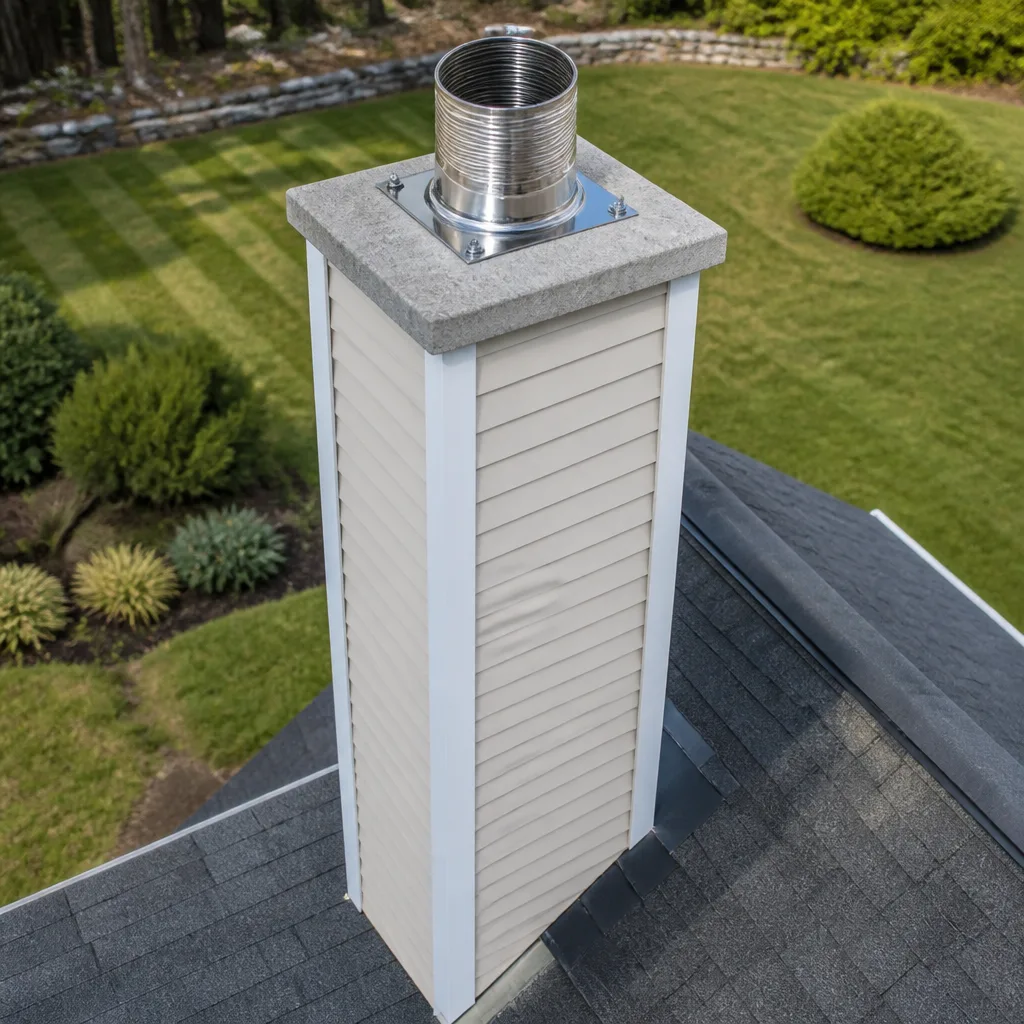 Flue relining
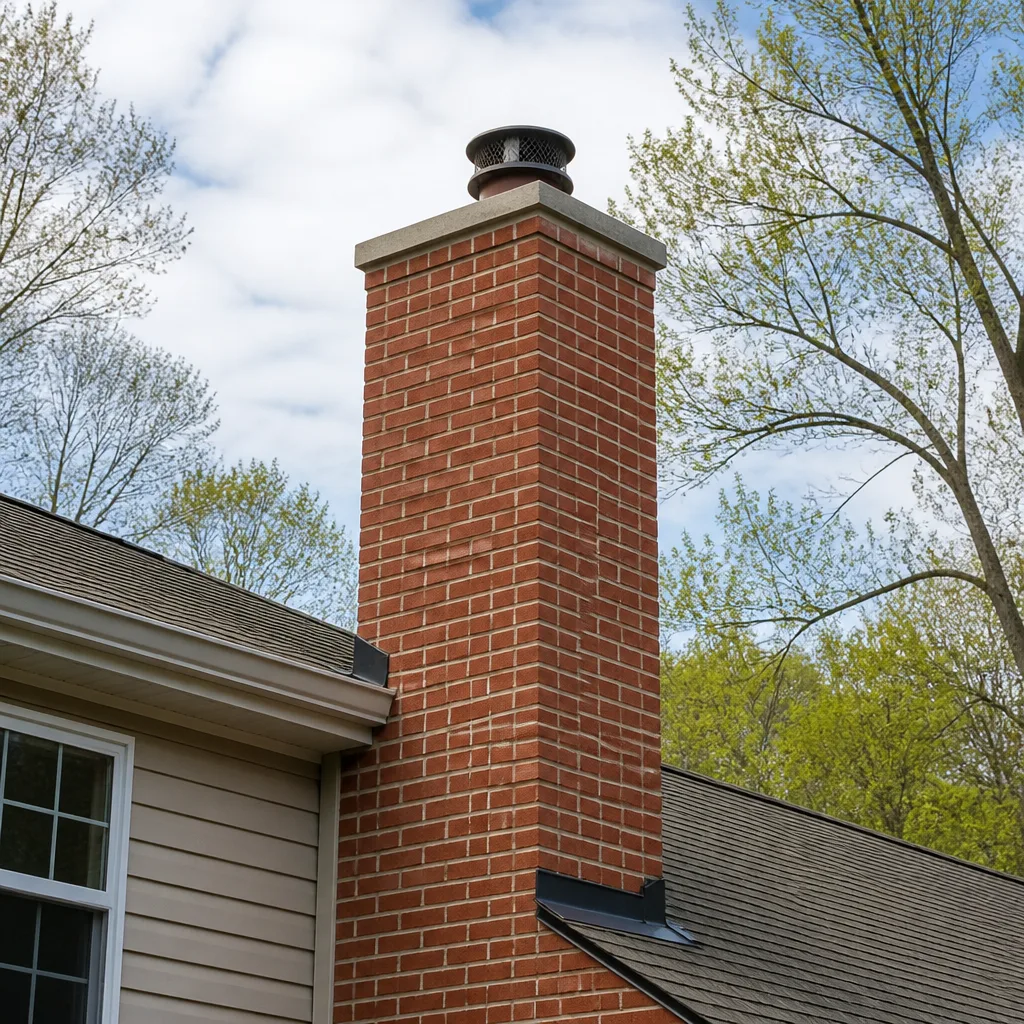 Masonry repair
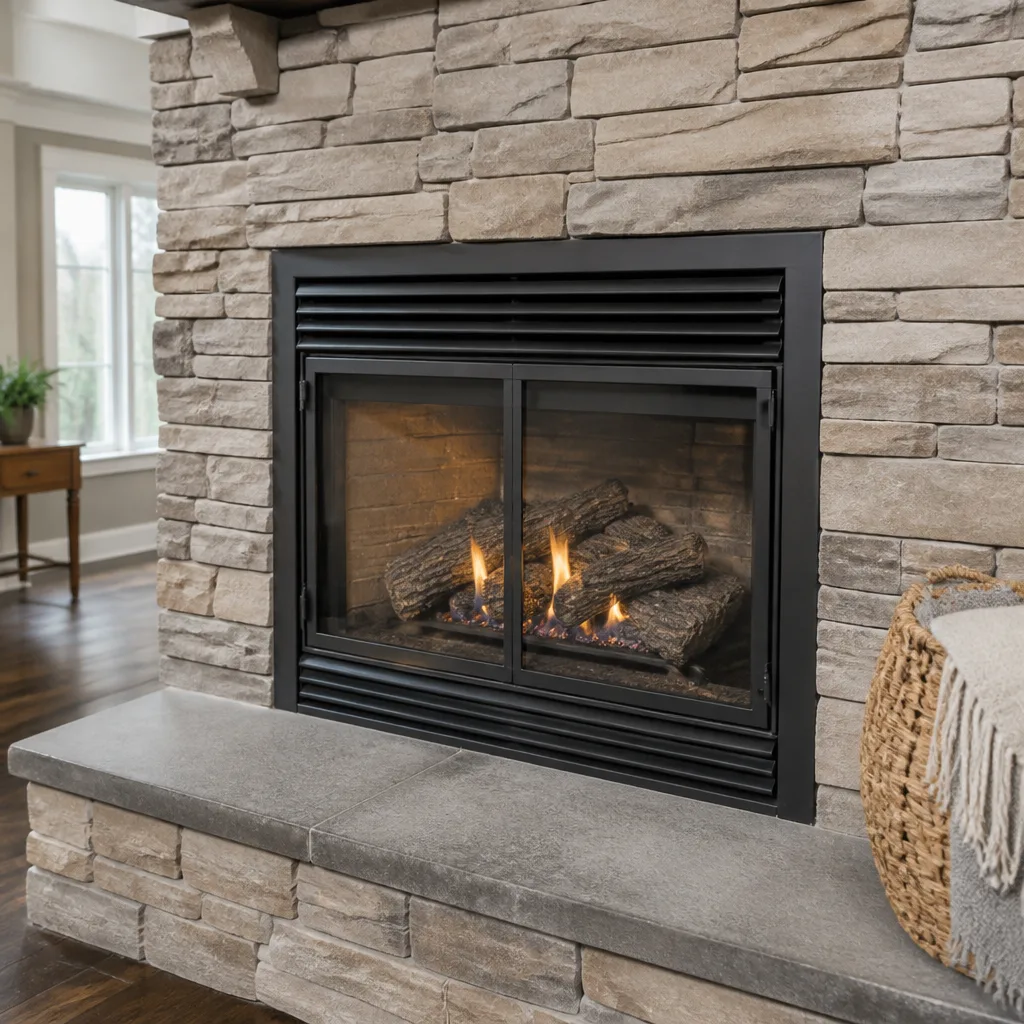 Gas fireplace service
Level 1 sweep and inspection to the NFPA 211 annual standard - flue, crown, cap, and flashing checked and photographed
Chimney sweep logs do not sweep chimneys. They loosen some creosote - which then falls where a brush and vacuum still have to collect it.
Chimney Sweep Maintenance Checklist for Alpharetta Homeowners
Most chimney maintenance checklists are written by marketers, not tradespeople. They tell you to “inspect the flashing” without explaining what damaged flashing actually looks like from a ladder you already own. This guide is different. Every item on this Alpharetta maintenance calendar produces a yes or a no, not a maybe. By the time you finish reading, you’ll know exactly what to check, when to check it, and what you’re looking at. We’ve spent two decades looking down Alpharetta chimneys, and we’re going to tell you what we actually see.
Styles & brands we work with
Quick Answer
A chimney maintenance checklist for Alpharetta homeowners should cover four seasonal checkpoints: a visual roofline inspection in fall, a damper function test before first burn, a mid-winter creosote check, and a spring moisture inspection. A standard Chimney Sweep services in Alpharetta typically runs $189 to $289, and most homes with regular wood-burning use should book one annually. Three photos taken from ground level are enough to get an accurate quote from any reputable sweep company.
Table of Contents
- The 12-Month Alpharetta Chimney Maintenance Calendar
- The Ground-Level Inspection Protocol
- The Roofline Visual Inspection
- The Damper Function Test (Under Two Minutes)
- The Three Photos That Get You an Accurate Quote
- DIY Fixes vs. Documented Contractor Responses
- Understanding Creosote in Alpharetta’s Climate
- Common Mistakes to Avoid
- When to Call a Professional
- Frequently Asked Questions
- The Bottom Line
The 12-Month Alpharetta Chimney Maintenance Calendar
Alpharetta’s climate doesn’t match national chimney advice. Our winters are short and wet, our springs bring heavy pollen, and our summers hit 90 degrees with humidity that makes mortar sweat. A maintenance calendar written for Vermont or Colorado misses what actually happens to chimneys in the Atlanta metro. Here’s the calendar we recommend for Alpharetta homeowners, broken into four checkpoints that match our actual weather patterns. For The Complete Guide to Chimney Cleaning in Alpharetta, see our detailed resource.
Fall (September to October): Pre-Burn Preparation
- Book your annual sweep. In Alpharetta, sweep companies get booked solid from late September through Thanksgiving. A standard chimney sweep in Alpharetta runs $189 to $289 depending on creosote buildup and accessibility. Booking in early September means you’re not waiting three weeks when the first cold snap hits.
- Walk the roofline from the ground. Look for missing or shifted caps, visible cracks in the crown, and any dark staining on the brick. Dark staining means water has been sitting where it shouldn’t.
- Run the damper function test (instructions below). If the damper doesn’t open and close smoothly, you’re burning with a restricted draft or losing conditioned air up the flue all winter.
Winter (December to February): Active Burn Monitoring
- Check creosote at the 30-day mark. After about a month of regular burning, put on a work glove, reach just inside the firebox above the damper, and run a finger along the flue wall. If you wipe off more than 1/8 inch of black, flaky or shiny residue, you’re accumulating creosote faster than normal. Adjust your wood or burn habits.
- Watch for smoke backing into the room. Any smoke spilling into the living space when the fire is established means a draft problem. It could be a cold flue, a partially closed damper, or a blockage. Don’t ignore it.
- Listen for wind noise at the chimney. A rattling damper or a whistling cap during Alpharetta’s winter wind gusts tells you a component is loose. That’s a repair that should be documented and scheduled before it becomes a leak.
Spring (March to May): Moisture Assessment
Alpharetta gets roughly 52 inches of rain a year, and a lot of it falls in spring. Water is the single most destructive force for a masonry chimney, and it works slowly. Spring is when you want to check what the winter rain did.
- Inspect the firebox for damp spots or efflorescence. Efflorescence looks like white, chalky powder on the brick. It means water is moving through the masonry and leaving mineral deposits behind. A little is common in older Alpharetta homes. A lot means the brick is saturated.
- Check the ceiling around the chimney chase for stains. If your chimney runs through the attic and second floor, a water stain on the ceiling near it is the first visible sign of a flashing leak. By the time you see the stain, water has been getting in for a while.
- Schedule repairs now, not in September. Masonry work, flashing repair, and crown resealing all need dry weather to cure. Spring in Alpharetta has enough dry days to get the work done right before the summer humidity sets in.
Summer (June to August): Dry-Season Inspection and Repair
- Book your chimney inspection. The Chimney Inspection in Alpharetta page covers what a Level 1 vs. Level 2 inspection includes, but the short version is this: summer is when we can actually see everything. The last season’s creosote has dried, cracks are visible without snow or water hiding them, and repairs have time to set.
- Check the cap and screen. Summer is when Alpharetta’s squirrels, chimney swifts, and raccoons are most active. A missing or damaged cap in June means you’ll hear scratching in the flue by August.
- Verify the waterproofing. If you had masonry sealed in the last year or two, a summer check confirms it’s still beading water. If you’ve never had it sealed, summer is the cheapest time to do it.
The Ground-Level Inspection Protocol
You don’t need to get on a roof to know whether your chimney has a problem. You need to know what to look for from your own yard. Here’s the protocol we recommend to every Alpharetta homeowner, and it takes about ten minutes with nothing but your eyes and maybe a pair of binoculars if you have them.
What to check from the ground:
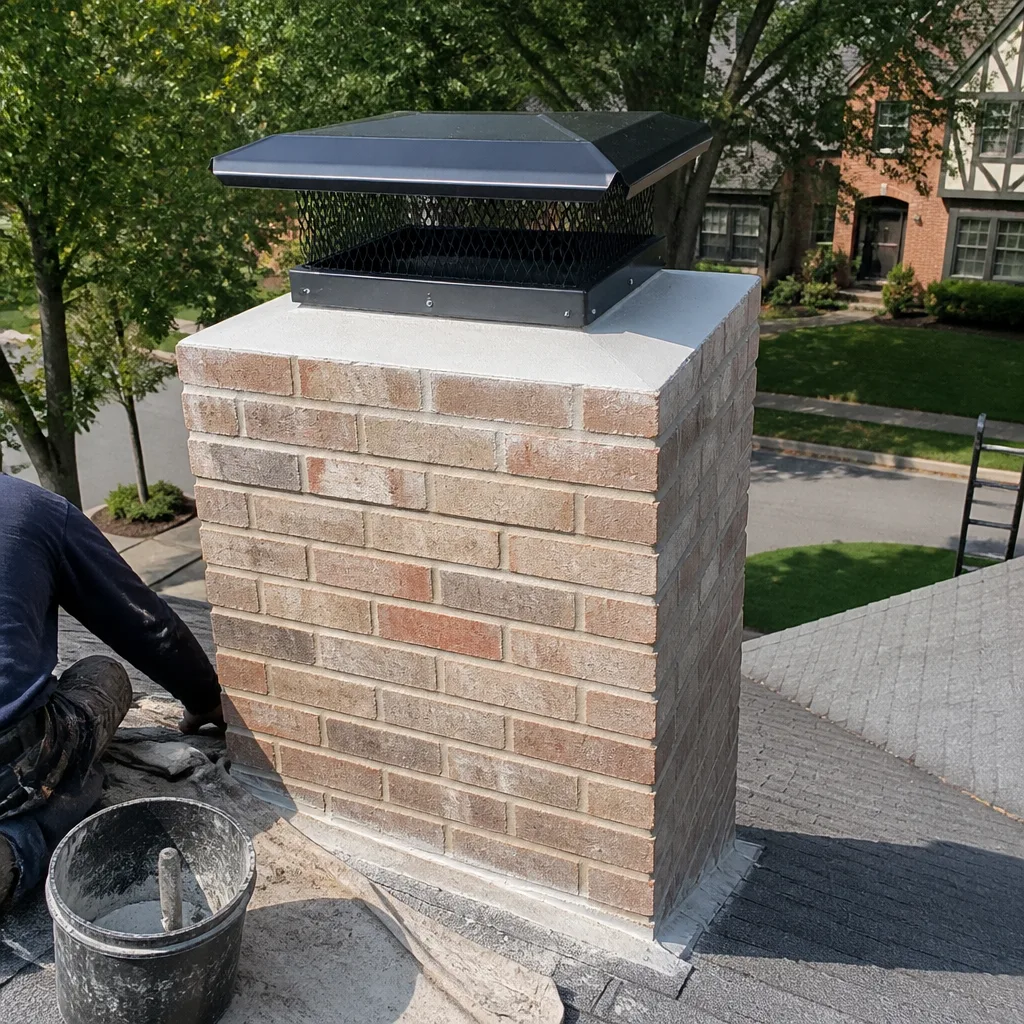
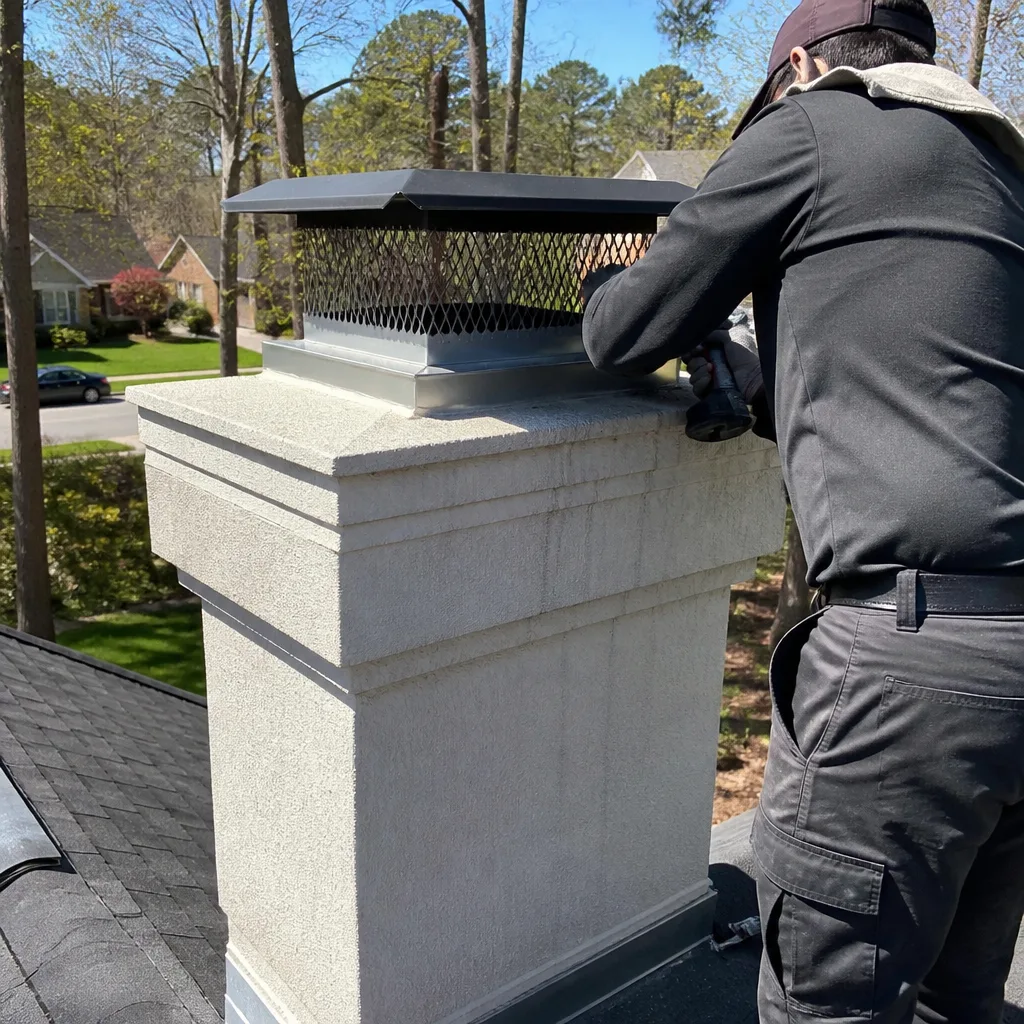
- The cap. You should see a metal or stone cap sitting level on top of the flue. If it’s tilted, missing, or you can see daylight through a gap where it meets the crown, water and animals both have a clear entry point.
- The crown. This is the concrete slab that surrounds the flue at the very top. It should look smooth and continuous. Cracks that you can see from the ground are already wide enough to let water in. Hairline cracks are harder to spot from below, but any visible crack is a problem.
- The brick or stone veneer. Look for bricks that are spalling, which means the face has popped off or is flaking away. Spalling is a water problem that’s been going on for years. Also look for dark vertical stains running down from the top, which indicate water is getting behind the brick and leaching through.
- The flashing. Flashing is the metal strip where the chimney meets the roofline. From the ground, you’re looking for gaps, lifted edges, or rust. Damaged flashing doesn’t need a roofer to diagnose; if the metal doesn’t lay flat against both surfaces, water is getting in.
- The overall angle. A leaning chimney is rare but catastrophic. In Alpharetta’s clay-heavy soil, foundation settlement happens. Stand directly in front of the chimney and sight it against the edge of the house. If the chimney isn’t parallel to the house corner, call someone that week.
Here’s the thing about a ground-level inspection: it’s a screening tool, not a diagnosis. It tells you whether to take the next step, not what the next step is. But it should always be your first step, because it costs nothing and catches the obvious failures before they become structural ones.
The Roofline Visual Inspection
If your ground-level check turns up anything worth a closer look, or if you’re comfortable on a ladder, the roofline inspection is where the real condition of your chimney becomes visible. We say “roofline” rather than “roof” intentionally: you don’t need to walk the roof, and we don’t recommend that any homeowner do so. A ladder placed against the eave is enough to see the critical points.
What you’re looking for at the roofline:
- Flashing that has pulled away from the brick. Flashing in Alpharetta homes is typically either aluminum or galvanized steel, and it’s sealed with roofing tar or caulk that hardens and cracks over time. If you can slide a flathead screwdriver between the flashing and the brick, the seal has failed.
- Cracked or crumbling mortar joints. Run your hand along a few joints above the roofline. If the mortar crumbles when you touch it or you can pick chunks out with your fingernail, the mortar is what we call “repointing territory.” That means the joints need to be ground out and refilled, not caulked over.
- A cracked crown. At the roofline, you’re close enough to see the crown clearly. Look for hairline cracks running across the surface. In Alpharetta’s freeze-thaw cycles, those hairline cracks fill with water, freeze, and expand. A crack that’s 1/16 inch wide this spring will be 1/4 inch wide in two or three winters.
- Signs of animal entry. Nesting material sticking out of the flue, droppings on the crown, or scratching sounds you can now place with certainty all mean the cap has failed. Chimney swifts are protected in Georgia, and their nests can’t be removed during nesting season, so catch this early or you’ll wait until fall to use the fireplace.
One note on safety: if the ladder work involves a steep pitch, a second-story roofline, or any part of the inspection you can’t reach while keeping three points of contact on the ladder, stop. A roofline inspection is not worth a fall. We’ve done this work from ladders on Alpharetta homes since 2002, and the rule never changes: if you’re not stable, you don’t go higher.
The Damper Function Test (Under Two Minutes)
The damper is the metal plate inside the chimney that opens to let smoke out and closes to keep conditioned air in. It’s the only moving part on most chimneys, and it’s the part homeowners forget about entirely. A damper that’s stuck open costs you money every month your HVAC runs. A damper that’s stuck closed makes your fireplace unusable, and a damper that’s partially open will make every fire smoky and every summer heat bill higher. Here’s the test.
- Put on a headlamp or hold a flashlight. You need to actually see the damper, which is inside the firebox, at the top, just before the flue begins.
- Find the handle. Most dampers in Alpharetta homes are either a “poker” style with a rod you push or pull, or a “rotary” style with a knob that turns. Some older homes have a chain or cable.
- Open the damper fully. Move the handle through its full range of motion in the open direction. You should feel the plate move freely, with no grinding, no catching, and no point where it stops and goes no further.
- Close the damper fully. Reverse the direction. The plate should seat against the frame with a soft metal-on-metal sound, not a clatter. If you can see daylight around any edge of the closed plate from your position inside the firebox, the damper isn’t sealing.
- Test the mid-position. Not all dampers are designed to hold a midpoint, but if yours is, it should stay where you put it. A damper that drops from the open position on its own has a spring or mechanism problem.
This test takes under two minutes. It costs nothing. And it tells you immediately whether the damper is a working component or a decorative one. If it fails, it’s a repair, not a DIY project. Damper replacement requires removing masonry or cutting into the flue tile in most Alpharetta homes, and it’s work we do with a written quote before anything starts. For more on what damper repair involves, see the Chimney Repair in Alpharetta page.
The Three Photos That Get You an Accurate Quote
Here’s something most chimney companies won’t tell you: you can get an accurate quote for most standard work without anyone setting foot on your property. We still recommend an inspection before any repair, because nothing replaces eyes on the actual flue condition, but for a ballpark quote, three photos from your phone will get you within the right price range. And any company that refuses to give you a ballpark without a site visit is probably planning to size you up before they size up the job.
Photo 1: The full chimney from ground to cap. Stand far enough back that the entire chimney is in frame, from where it meets the roofline to the cap. This shows us the overall condition, the height, and the surrounding roofline. It tells us what kind of ladder setup the job will need.
Photo 2: A close-up of the cap and crown. Zoom in as far as your phone will go while keeping the image sharp. We’re looking for cracks, missing metal, and the condition of the flue tile. If your phone has a good zoom, this one photo can tell us whether we’re quoting a standard sweep or a crown repair.
Photo 3: The firebox interior, looking up. Open the damper, point your camera straight up the flue, and take a photo with the flash on. If the photo is just a black square, move the phone around until the flash catches the flue wall. This shows creosote buildup, flue tile condition, and whether there’s visible blockage.
That’s it. Three photos. Send them with your address and a note about the last time the chimney was swept, and a reputable company in Alpharetta will come back with a real number. At Flint Chimney Co Alpharetta, every quote gets confirmed in writing before any work starts, whether it started with three photos or a full inspection.
DIY Fixes vs. Documented Contractor Responses
There’s a line between what a homeowner should handle and what needs a contractor who will document the work in writing. Knowing where that line is keeps you safe and keeps you from paying for work you didn’t need. Here’s the breakdown for Alpharetta homeowners.
DIY: What you can handle yourself
- Routine ash cleanup. Remove ashes when they’re cold and the fire has been out for at least 24 hours. Use a metal bucket, not a paper bag or plastic container.
- Damper function test. The two-minute test above is a homeowner task. Do it twice a year.
- Ground-level visual inspection. Nothing to break, nothing to disassemble. Just your eyes and ten minutes.
- Smoke and CO detector battery replacement. Change batteries twice a year and test monthly. This is non-negotiable with any working fireplace.
Contractor required: What needs a documented professional
- Any repair to the flue liner. A cracked flue tile is a fire hazard. It’s not a patch job. If a company tells you they can “spot repair” a flue tile from inside the firebox, get a second opinion. Proper repair involves a relining system like HeatShield or a new stainless liner.
- Crown reconstruction. The crown is a structural component. Patching cracks with silicone caulk delays the problem for a season or two. Proper repair means building a new crown with the right concrete mix and expansion joints.
- Flashing replacement. Flashing that has separated from the brick needs to be cut out and replaced, not re-sealed. A re-sealed flashing will leak again within two years in Alpharetta’s rain.
- Damper replacement or repair. This is inside the flue, it involves metal components under tension, and a wrong move can crack the flue tile around it. Let a pro handle it.
- Any creosote accumulation stage 2 or 3. Stage 1 creosote is soft and fluffy, and a standard sweep handles it. Stage 2 is crusty, stage 3 is glazed and hard like glass. Stage 2 and 3 require chemical treatment or mechanical removal, and attempting either with homeowner tools will damage the flue.
The rule is simple: if the failure involves fire containment, water intrusion, or moving parts inside the flue, get a professional and get it in writing. If it involves looking at something, listening, or routine ash handling, you can do it yourself.
Understanding Creosote in Alpharetta’s Climate
Creosote is the black, tar-like substance that builds up inside chimneys when wood smoke cools and condenses on the flue walls. It’s a byproduct of every wood fire, and it’s the reason chimney sweeping exists. But the rate at which creosote builds up depends heavily on how you burn and where you live.
Alpharetta’s climate creates a specific creosote profile. Our winters are mild compared to the Northeast or Midwest, which means a lot of Alpharetta homeowners run small fires rather than long, hot burns. A small fire in a cold flue produces more creosote per log than a hot fire in a warm flue, because the smoke cools too quickly on its way up and condenses on the walls. Add in the Southeast’s love of unseasoned oak, which is dense and takes two years to dry properly, and you get creosote buildup that surprises people who moved here from colder climates.
Here’s what creosote levels mean in practical terms:
- Stage 1: Soft and flaky. Wipes off with a brush. A standard sweep removes it. This is what you should have after a professional cleaning.
- Stage 2: Crusty and hardened. Requires mechanical scraping or rotary cleaning. More expensive than a standard sweep, and it means you’ve gone too long between cleanings or your wood isn’t dry enough.
- Stage 3: Glazed and shiny. This is essentially a layer of hardened tar coating the flue. It’s highly flammable, it’s hard to remove, and in some cases it’s easier to reline the flue than to clean it. Stage 3 creosote is a fire waiting for the right temperature.
The maintenance calendar prevents all of this. An annual sweep at the start of burning season and a mid-winter creosote check catch Stage 1 before it becomes Stage 2 or 3. Our Chimney Sweep in Alpharetta page walks through what a standard sweep includes, what it costs, and what preparation you need to do before we arrive.
Common Mistakes to Avoid
- Paying for a sweep every year but never having the flue inspected. A sweep cleans the flue. An inspection evaluates its condition. They’re different services. Every year you should get both, not just the cleaning.
- Burning unseasoned wood because it’s available. Freshly cut oak from an Alpharetta backyard tree often has 40-50% moisture content. It should be under 20%. Burning wet wood doubles your creosote production and produces half the heat.
- Using the fireplace as a primary heat source without a dedicated wood supply. Some Alpharetta homes have fireplaces large enough to heat a room effectively, but if you’re burning scrap lumber, construction offcuts, or whatever fell in the yard, you’re loading the flue with creosote and risking a chimney fire. Burn only seasoned hardwood.
- Ignoring a damper that doesn’t seal properly. A damper that leaks air year-round costs you money every month, not just when you’re using the fireplace. Fix it once, and it stops being a problem.
- Trusting a chimney sweep who gives a quote over the phone without seeing any photos or doing an inspection. A reputable company will ask for photos or schedule an inspection before giving a final number. A quote that changes at the door is built on assumptions. As part of the Garrison Partners family, Flint Chimney Co Alpharetta gives every customer a written price before any work begins, based on real condition, not guesswork.
- Waiting until the first cold snap to book a sweep. Every year, the same pattern: Alpharetta gets its first cold weekend in November, and suddenly every sweep company is booking two to three weeks out. Schedule in September and burn whenever you want.
- Sealing a chimney that’s actively leaking with paint or silicone. Waterproofing a chimney is a real service, but it requires a proper masonry sealer that lets the brick breathe. Paint and caulk trap moisture inside the brick, making the problem worse. This is the single most common failed DIY repair we see on Alpharetta chimneys.
When to Call a Professional
Call a professional when any of these conditions apply: visible cracks in the crown, flashing that has separated from the brick, spalling brick you can see from the ground, creosote that feels glazed or hard instead of soft and flaky, smoke spilling into the room during normal operation, water stains on the ceiling near the chimney, or a damper that won’t open, won’t close, or won’t stay where you put it. These are not maintenance items. They’re failures that need a documented repair. Flint Chimney Co Alpharetta offers free estimates in Alpharetta, and every repair comes with a written one-year guarantee. Call (762) 600-1468 to schedule.
Frequently Asked Questions
A standard chimney sweep in Alpharetta typically runs $189 to $289, depending on creosote buildup, flue type, and chimney height. The price includes the full sweep, a basic safety inspection, and cleanup of the firebox. For an exact quote, call (762) 600-1468 with three photos and your address, and we’ll give you a written number before any work starts.
Wood-burning fireplaces in Alpharetta should be swept once a year at the start of burning season, which means September or October. Homes that burn daily through the winter may need a second sweep in January or February. Gas fireplaces need less frequent sweeping, but the flue should still be inspected annually for blockages and water intrusion.
You need a new liner if the existing one is cracked, missing sections, or sized wrong for your appliance. A cracked flue liner is a fire hazard because it allows heat and gases to reach combustible materials around the chimney. We camera every inspection, so you’ll see the condition of the liner in the video and the photo report before anyone recommends a replacement. If the liner is in good condition, we’ll tell you that.
Creosote builds up, and creosote is flammable. A chimney fire can reach 2,000 degrees and crack the flue liner, which then allows the next fire to ignite the wood framing around the chimney. Even without a fire, creosote attracts moisture and accelerates corrosion of metal liners and dampers. The $200 sweep is the cheapest insurance you’ll ever buy for a house in Alpharetta.
Yes, and you should. The ground-level inspection protocol in this guide covers the cap, crown, brick, flashing, and overall alignment. It’s a screening tool that tells you whether to call a professional, not a substitute for a professional inspection. Do it every spring and fall, and call when something changes between seasons.
We work with professional-grade chimney products from HeatShield, Gelco, and Olympia Chimney, among others. The material is selected by the condition of your flue and the repair being done, not by what earns the highest margin. If we recommend a relining or repair product, we’ll show you the manufacturer’s spec sheet and explain why it’s the right fit for your chimney.
It shouldn’t. A professional sweep uses dust containment systems and drop cloths, and the firebox should be cleaner when we leave than when we arrived. If a company has a reputation for leaving soot in the living room, that’s a process problem, not a chimney problem. At Flint Chimney Co Alpharetta, cleanup is part of the written scope of work, and it’s covered by the same one-year guarantee as everything else we do.
The Bottom Line
A chimney maintenance checklist only works if every item on it produces a clear yes or no. The ground-level inspection tells you whether to make that call. The damper test tells you whether your damper is functional. The three photos tell a sweep company what you’re dealing with before anyone drives to your house. The seasonal calendar maps all of it to Alpharetta’s actual weather, which is wetter and milder than most national advice assumes. Follow the calendar, photograph what you find, and when something fails, get a professional who will put the repair in writing with a full-year guarantee. Browse our more guides & resources for year-round chimney care. That’s the standard every Alpharetta homeowner should hold their chimney company to, and it’s the standard we’ve worked to since 2002.
Back to the Flint Chimney Co Alpharetta home page for all services, or call (762) 600-1468 for a free estimate.
Written by Hank Delano, Owner at Flint Chimney Co Alpharetta, serving Alpharetta since 2002.
See the difference
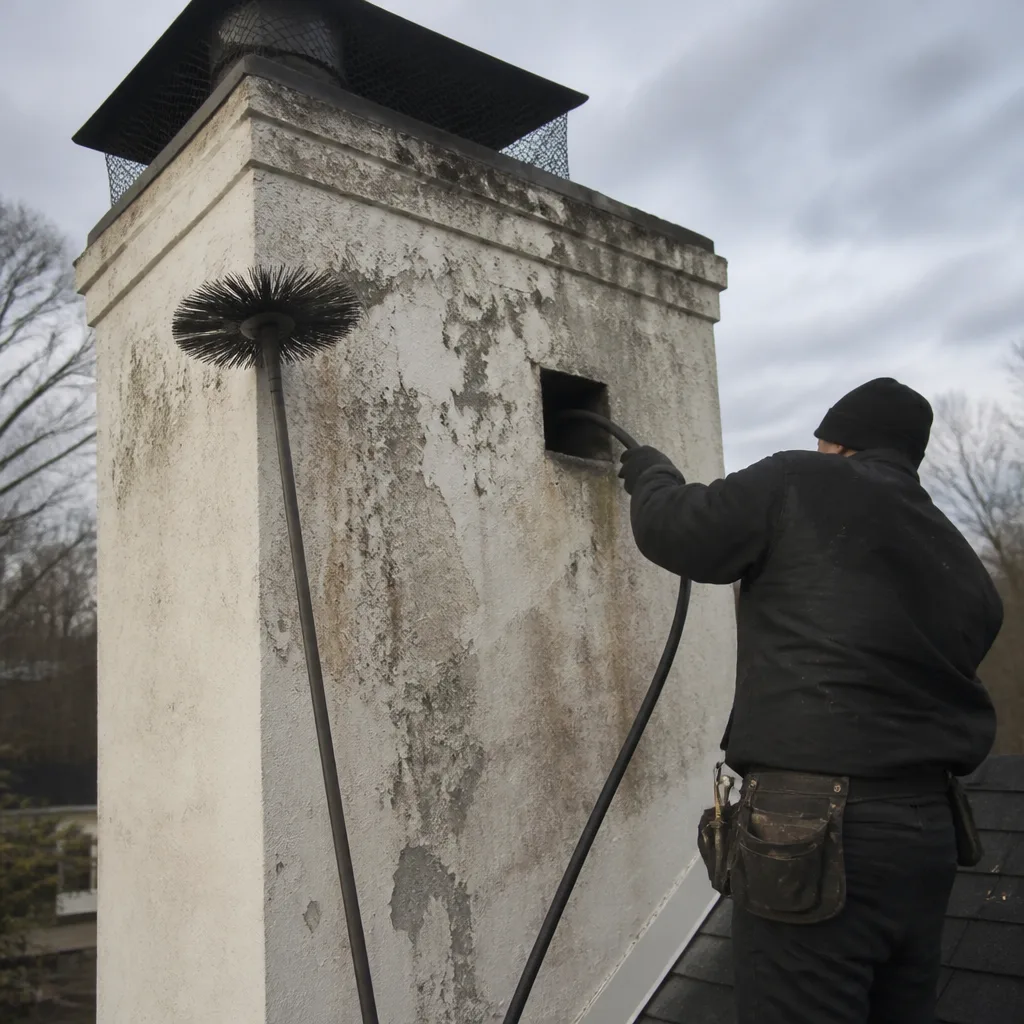 Before
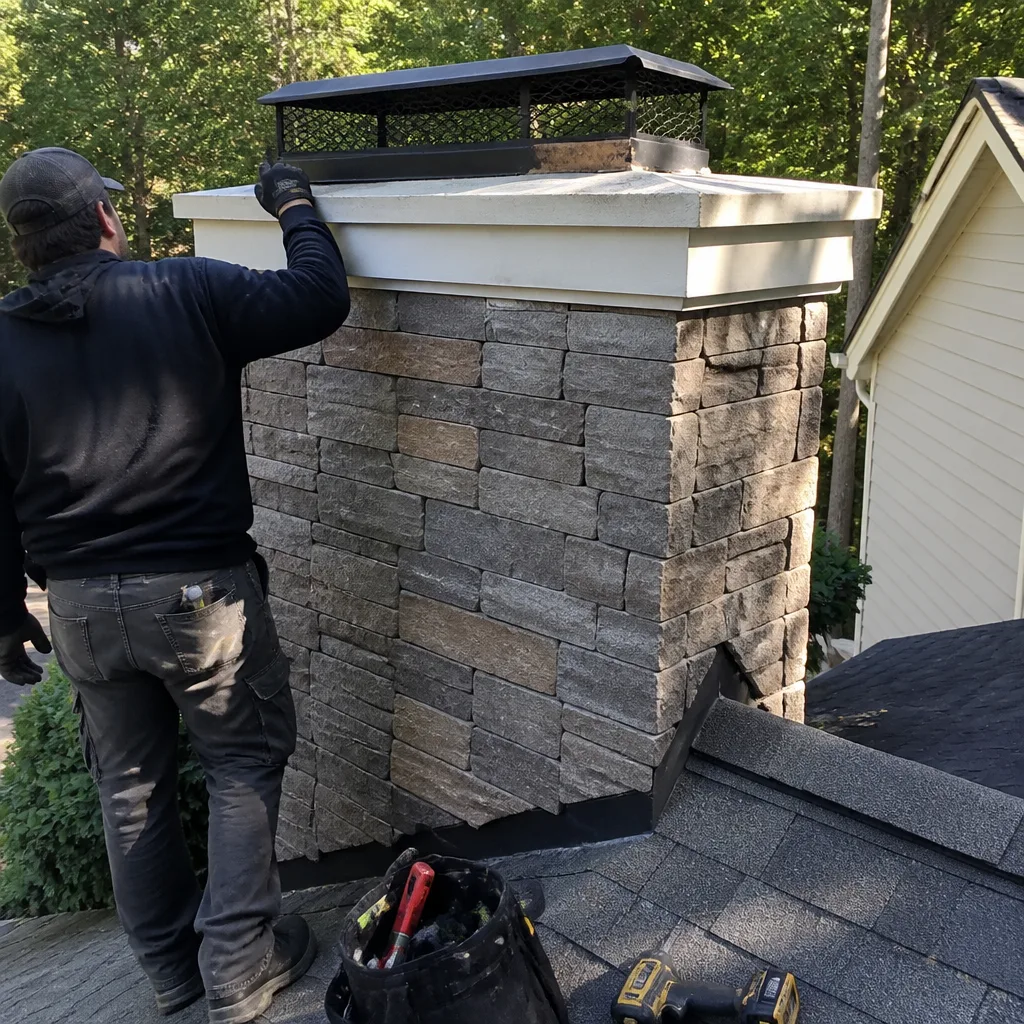 After
After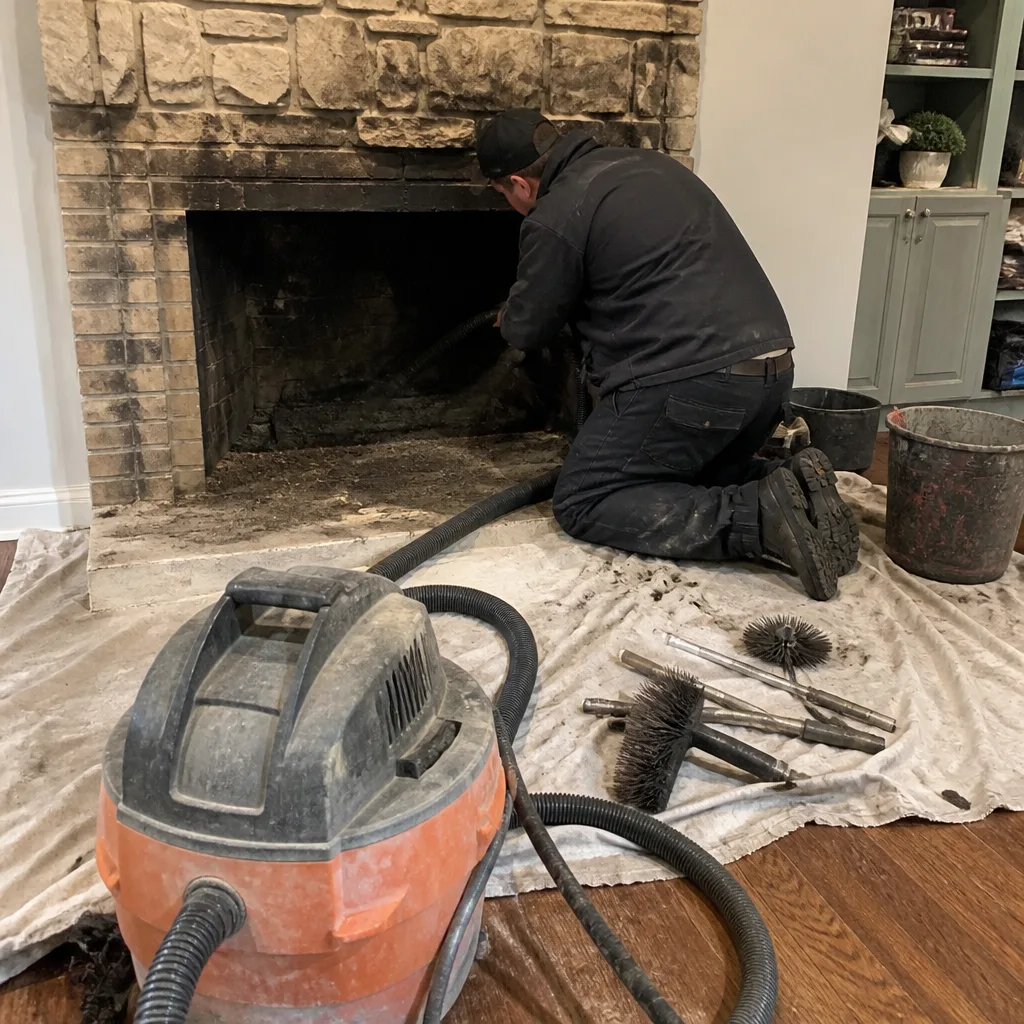 Before
 After
After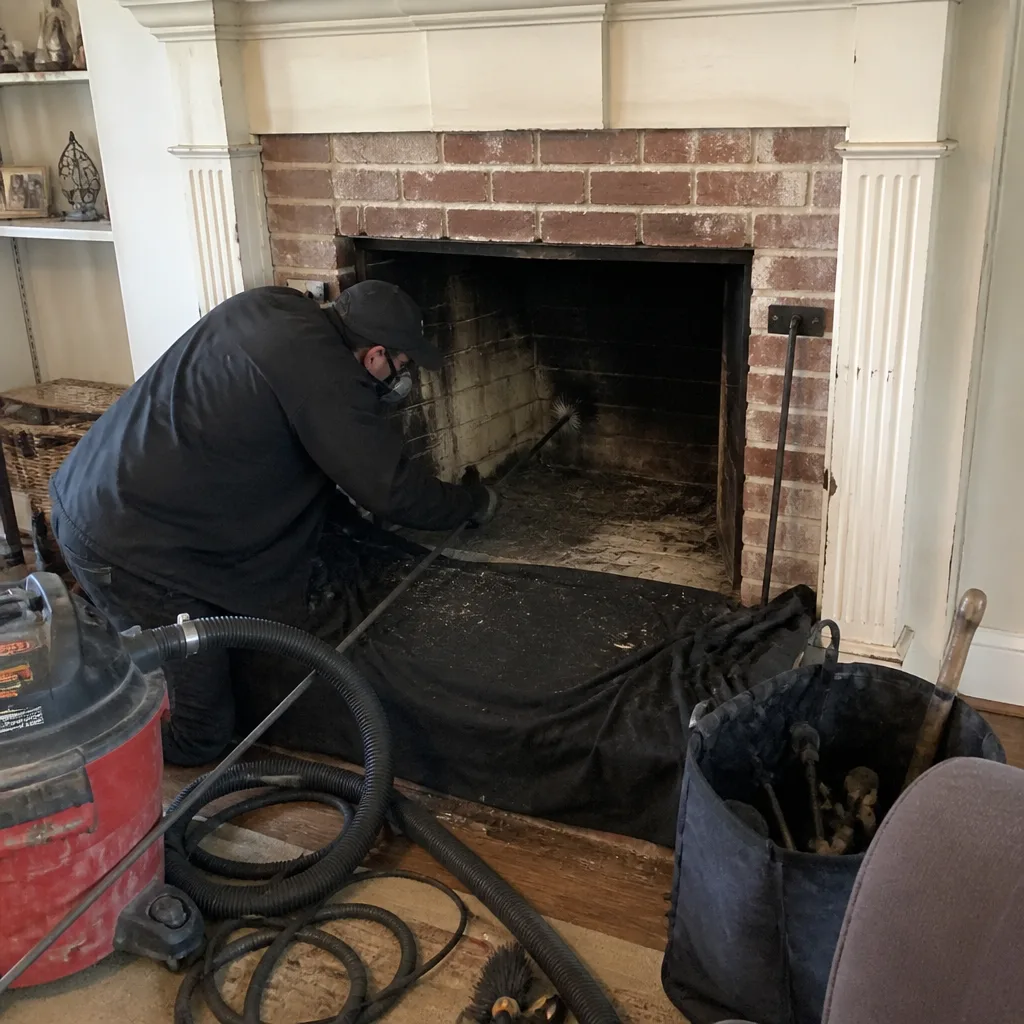 Before
 After
After