
Last updated October 15, 2026
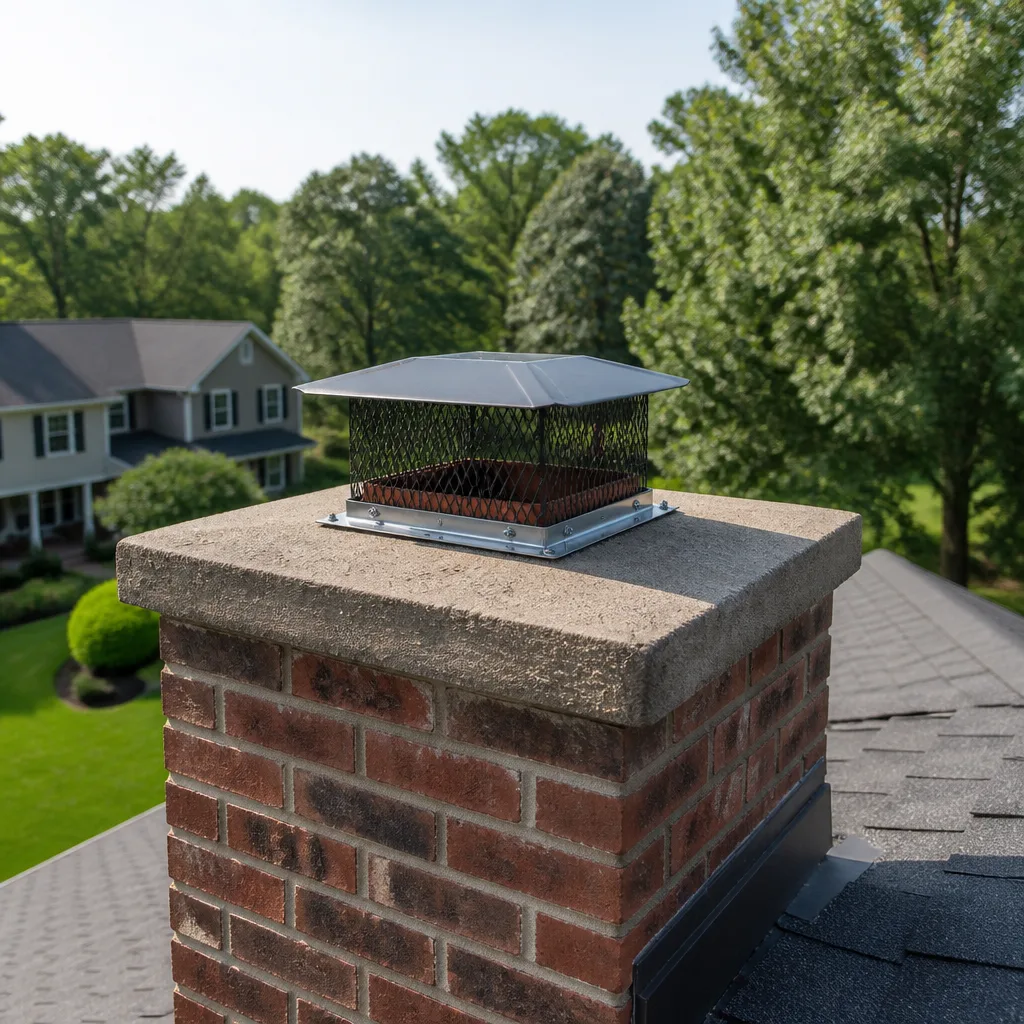 Sweep & inspection
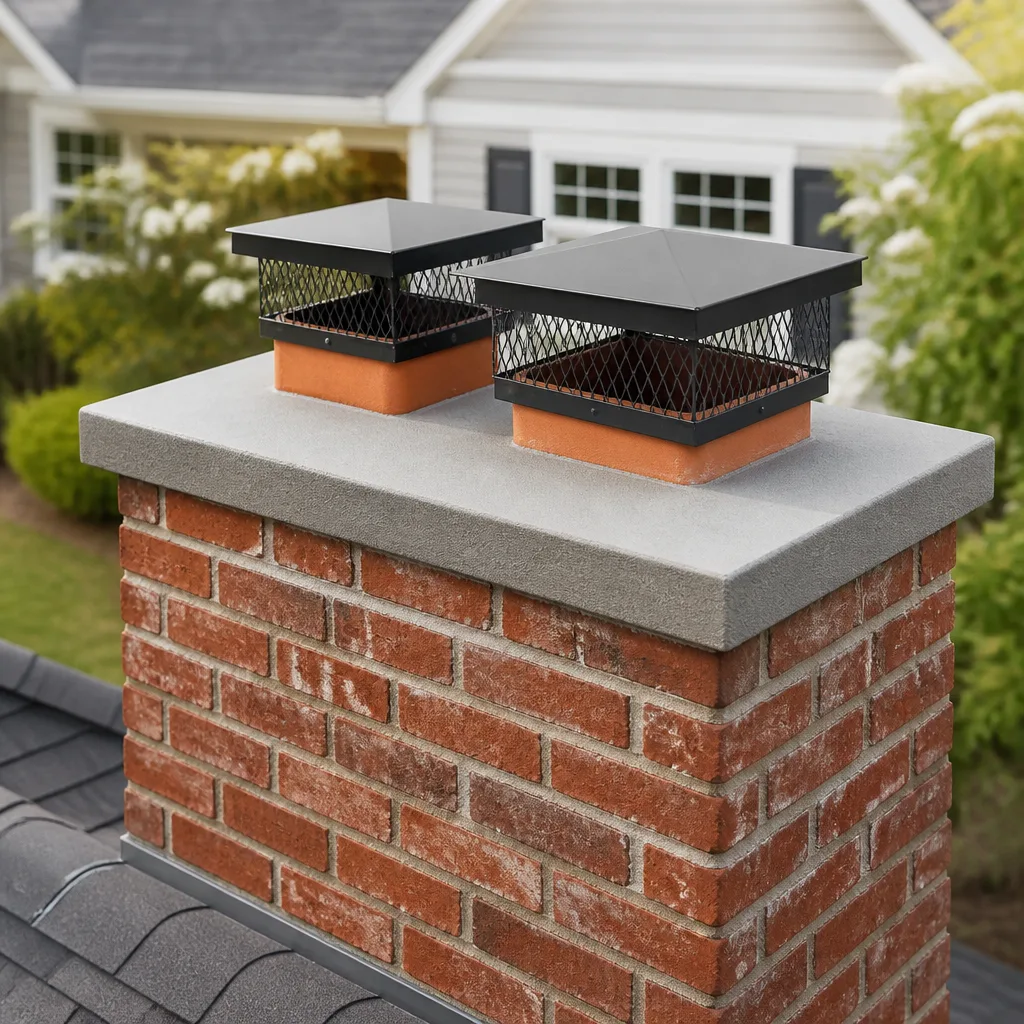 Caps & crowns
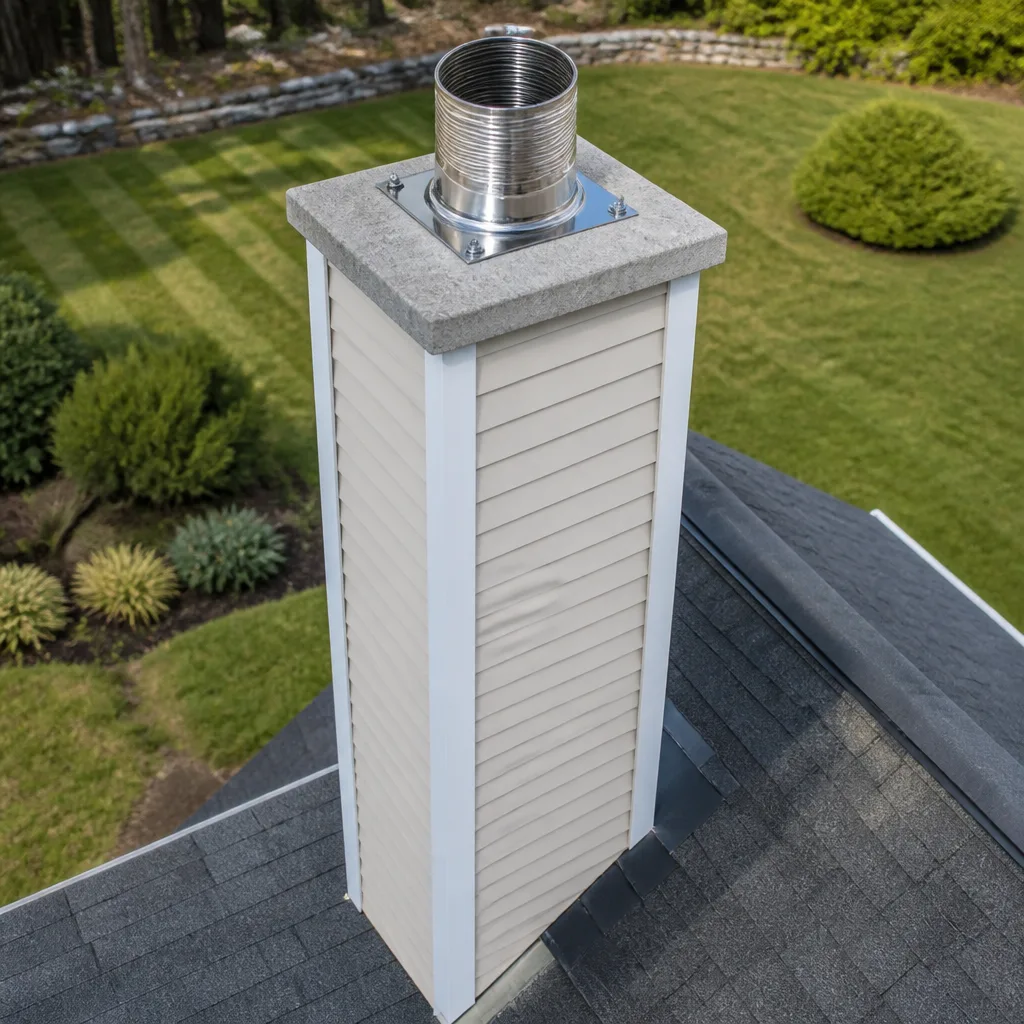 Flue relining
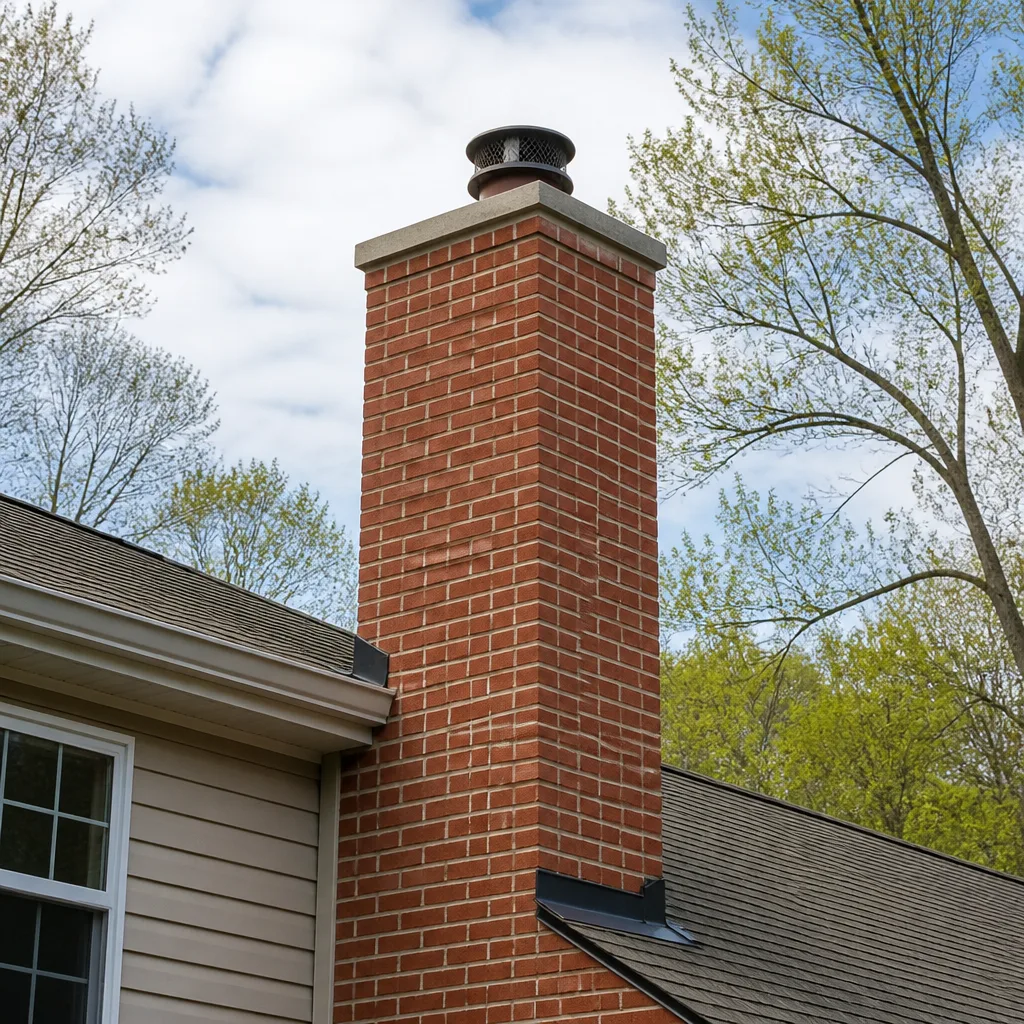 Masonry repair
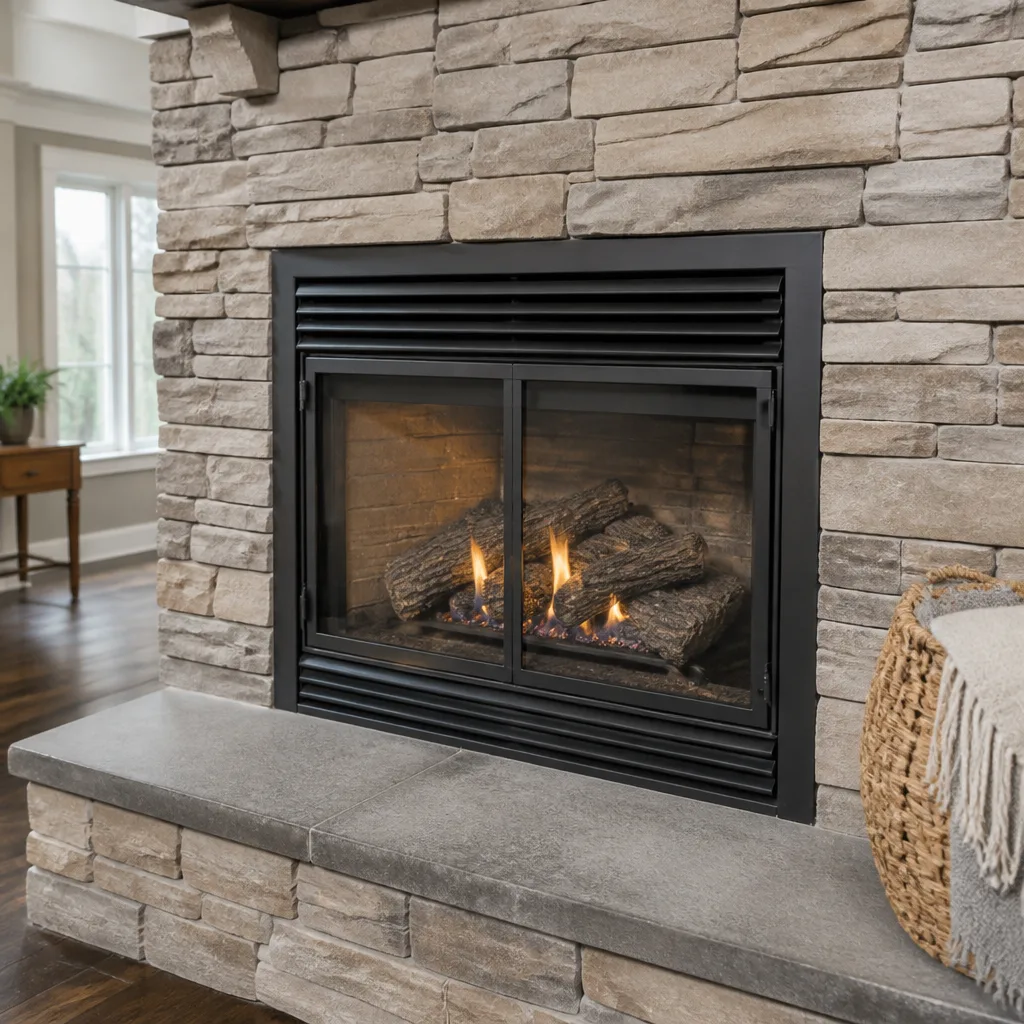 Gas fireplace service
Level 1 sweep and inspection to the NFPA 211 annual standard - flue, crown, cap, and flashing checked and photographed
Chimney sweep logs do not sweep chimneys. They loosen some creosote - which then falls where a brush and vacuum still have to collect it.
DIY vs Professional Chimney Cleaning: The Alpharetta Homeowner’s Decision Guide
A complete DIY chimney cleaning kit costs between $80 and $150 and takes three to four hours the first time you use it. But here’s what the kit box doesn’t show you: it only addresses visible creosote on the flue walls you can reach from the top, it skips the smoke chamber shelf entirely where creosote piles up in Alpharetta’s humid-burning season, and it produces no written record your insurance company can reference after a fire. This guide walks you through the actual decision tree, the real costs, and the four chimney configurations common in Alpharetta where a DIY attempt creates a safety gap you cannot see from the roof. By the end, you’ll know exactly when to buy the kit and when to pick up the phone.
Quick Answer
For most Alpharetta homeowners, professional chimney cleaning is the lower-total-cost option once you factor in the mandatory follow-up inspection, the documentation requirement for insurance, and the creosote you cannot reach with a consumer-grade kit. DIY chimney cleaning is genuinely reasonable for a narrow set of conditions: single-story home, wood-burning masonry fireplace, confirmed Stage 1 creosote, and a roof pitch of 4/12 or lower. If your setup doesn’t match all four of those conditions, the math favors calling a professional-see our How to Hire a Chimney Cleaning Contractor in Alpharetta: A Step-by-Step Guide for what to look for.
Styles & brands we work with
Table of Contents
- The Real Cost of DIY Chimney Cleaning in Alpharetta
- What a DIY Kit Physically Cannot Clean
- The Four Alpharetta Chimney Configurations Where DIY Fails
- The Insurance Claim Problem Nobody Mentions
- What a Professional Sweep Produces That DIY Cannot
- The Specific Conditions Where DIY Is Reasonable
- Step-by-Step: Making the Right Call for Your Chimney
- Understanding Creosote Stages and What They Mean
The Real Cost of DIY Chimney Cleaning in Alpharetta
A professional chimney sweep in Alpharetta typically runs $189 to $329 for a standard single-flue cleaning. The DIY kit costs $80 to $150. On the surface, that looks like a savings of $100 to $180. But the surface isn’t where the cost stops.
Here’s the actual line-item breakdown of a first-time DIY attempt:
| DIY Cost Item | Realistic Range |
|---|---|
| Rod kit with brush (8-inch round, masonry flue) | $80 – $150 |
| Drop cloths, tarps, painter’s tape | $15 – $25 |
| Shop-vac rental or purchase with HEPA filter | $30 – $80 |
| Disposable coveralls, N95 masks, safety glasses | $20 – $35 |
| Ladder (if not owned) or roof safety harness | $0 – $150 |
| Follow-up professional inspection to validate work | $99 – $199 |
| Time cost: 3 – 4 hours first attempt, 2 hours after | Your hourly value |
Even with a zero-dollar ladder you already own, the real cost lands somewhere between $244 and $489 once the professional inspection is included. And that inspection is not optional if you want the work to mean anything. More on that in the insurance section below.
Now compare that to a professional sweep. Flint Chimney Co Alpharetta delivers a written price before any work starts, so the invoice number matches the number you approved. The sweep includes the smoke chamber, the damper assembly, the flue from top to bottom, and a written inspection record with photographs. There’s no disposal fee, no cleanup for you to manage, and no time spent on a roof in Georgia’s summer heat.
What a DIY Kit Physically Cannot Clean
The consumer chimney cleaning rod kit is a brush on a stick. It scrubs the vertical flue liner walls. That’s it. A standard masonry fireplace in an Alpharetta home has at least five surfaces and components that collect creosote or block airflow, and the rod kit addresses exactly one of them.
Here’s what stays dirty after a DIY top-down brushing:
- The smoke chamber shelf. This is the angled transition area above the firebox where smoke slows down before entering the flue. Creosote deposits here are often thicker than on the flue walls because the smoke cools and lingers. A rod brush from the top cannot make the 90-degree bend into this area.
- The smoke chamber walls. These corbeled brick surfaces collect creosote unevenly. Professional sweeps use a rotary loop system with a drill-driven whip head to reach them. Consumer kits don’t include this attachment.
- The damper assembly. The cast-iron or steel damper sits at the top of the firebox. Creosote builds on the damper plate and around its frame. If the damper won’t seat properly because of buildup, the fireplace drafts poorly even after a clean flue.
- The firebox itself. Ash removal is straightforward, but burned-on creosote at the firebox walls and floor requires scraping tools and chemical treatment in some cases.
- The chimney cap and spark arrestor. These sit at the top of the flue and collect creosote on the mesh. A blocked spark arrestor is a draft killer and a fire hazard. DIY kits often skip this because reaching it requires removing the cap.
In our experience, the homeowners who call Flint Chimney Co Alpharetta after a DIY attempt usually report the same thing: the flue looked fine from the top, but the smoke chamber was never touched. The camera never lies. A professional chimney inspection in Alpharetta includes photographic documentation of every surface we clean, so you’re not taking anyone’s word for it.
The Four Alpharetta Chimney Configurations Where DIY Fails
Home styles in Alpharetta vary more than most people realize. We see everything from 1970s split-levels near downtown to 2010s craftsman-style builds in neighborhoods like Windward and Halcyon. The chimney type matters more than the address when it comes to DIY safety.
1. Gas Log Inserts
A gas log set inside a masonry fireplace produces a different kind of deposit than wood smoke. It leaves a fine, powdery soot that’s easy to dismiss as harmless. But that soot mixes with moisture from Georgia’s humidity and forms an acidic coating on metal components. DIY kits don’t address the gas log set, the gas line connections, or the venting configuration. A homeowner who pulls a brush through a gas-log flue without understanding the venting setup can dislodge the connector or damage the damper clamp. We see this regularly in Alpharetta homes that converted from wood to gas in the 1990s and 2000s.
2. Zero-Clearance Factory-Built Fireplaces
These metal-box fireplaces are common in Alpharetta homes built after 1990. The flue is a metal pipe, not a masonry tile liner. A standard masonry rod kit with an 8-inch round brush doesn’t fit these flues properly. Worse, the internal baffle and refractory panels require removal before cleaning, and reinstalling them incorrectly changes the fireplace’s airflow properties. The manufacturer’s manual for most zero-clearance units specifically recommends professional cleaning because of these components.
3. Two-Story Flues
A two-story Alpharetta home has a flue run of 25 to 35 feet. Consumer rod kits typically come with four to six rods totaling 18 to 20 feet. They physically cannot reach the bottom of a two-story flue. Adding more rods creates flex in the line, which means the brush wobbles and misses wall contact. The homeowner thinks they cleaned the flue because they ran the brush up and down. They actually only brushed the top 60 percent.
4. Systems with Previous Liner Repairs
If a previous owner installed a stainless steel liner, the brushing approach changes. A stiff wire brush can scratch or loosen a liner that’s already aging. A homeowner with no documentation showing when the liner was installed or what brand it is runs a real risk of causing damage that costs more than the professional sweep would have. We work with professional-grade liners including DuraFlex and Olympia Chimney products, and the material specification matters. A brush that’s right for a clay tile flue is wrong for stainless steel.
The Insurance Claim Problem Nobody Mentions
Here’s the part most DIY guides skip: your homeowner’s insurance policy is not on your side after a chimney fire if you cannot produce a professional cleaning record from the prior 12 months. This isn’t speculation. Insurance adjusters in Georgia routinely ask for maintenance documentation when a chimney fire claim is filed. The logic is simple: a chimney fire is frequently classified as a preventable maintenance failure, not a sudden and accidental event.
What happens in practice:
- A chimney fire occurs in an Alpharetta home. The fire department responds, or the homeowner notices the damage later.
- The homeowner files a claim for the interior damage, the flue damage, or both.
- The adjuster asks for the chimney’s last cleaning and inspection record.
- If the homeowner says “I cleaned it myself,” the adjuster asks for photographs, video, or some form of third-party validation.
- The homeowner has none. The claim is denied or paid out at a reduced amount because the homeowner cannot document that the chimney was in a safe, maintained condition before the fire.
A professional sweep produces a written inspection record with dated photographs. That record is the single piece of evidence that separates a covered claim from a denied one. When Hank Delano and our team at Flint Chimney Co Alpharetta complete a sweep, you leave with documentation that names the date, the flue condition, the creosote stage, and the work performed. That’s not a nice-to-have. For insurance purposes, it’s the point of the service.
What a Professional Sweep Produces That DIY Cannot
Beyond the cleaning itself, a professional sweep generates three outputs that have real-world value:
1. A Written Inspection Record
Every chimney inspection in Alpharetta we perform ends with a written report. It states the date, the flue measurements, the creosote stage observed, any damage found, and the work completed. This document is what your insurance company asks for. It’s also what a home inspector references if you sell your home. A DIY job produces no such record because no third-party verification exists.
2. Photographic Documentation of Flue Condition
We run a camera up the flue before and after cleaning. The before photos show the creosote. The after photos show the cleaned surfaces. You see the flue liner condition with your own eyes. If there’s a crack in a clay tile liner or a gap at a joint, the camera finds it. That kind of finding changes the conversation from “cleaning” to chimney repair in Alpharetta, which is a more serious and more urgent matter.
3. Contractor Liability Backed by a Written Guarantee
When a professional sweep is performed, the responsibility for the work’s quality belongs to the company. At Flint Chimney Co Alpharetta, every repair carries the 365-Day Done Right Promise: a written guarantee valid for one full year from the service date. If a covered repair fails within that period, we return at no charge. No consumer DIY kit comes with a guarantee. If you miss a spot, that’s on you. If a fire happens, that’s on you too.
The Specific Conditions Where DIY Is Reasonable
We’re not going to tell you DIY is always wrong. It’s not. There’s a specific set of conditions where a homeowner with a $100 rod kit and a careful approach can do a perfectly acceptable job. The problem is that most people who attempt DIY don’t meet all four conditions, and the ones they miss are the ones that matter.
Here are the four conditions where DIY chimney cleaning is genuinely reasonable:
- Single-story home. The flue run is 12 to 15 feet. A standard rod kit reaches the full length without flex. You can work from the roof safely with a standard extension ladder.
- Wood-burning masonry fireplace. A traditional fireplace with a clay tile liner. No gas logs. No zero-clearance box. No prior liner installation.
- Confirmed Stage 1 creosote. You’ve looked at the flue walls with a flashlight or phone camera and the creosote is a light, dusty film with no shiny or tar-like deposits. Stage 2 and Stage 3 creosote are beyond DIY capability and require chemical treatment or mechanical removal.
- Comfortable on a roof with a 4/12 pitch or lower. A 4/12 roof rises 4 inches for every 12 inches of horizontal run. That’s a walkable pitch for someone with experience. Steeper roofs in Alpharetta neighborhoods with larger homes are not a safe place for a first-timer.
If you meet all four conditions, the DIY math changes. The kit costs $80 to $150, the job takes three to four hours, and the flue you clean is short enough that the rod kit actually reaches everything. You still need a professional inspection afterward if you want insurance documentation, but the cleaning itself is doable.
The practical problem in Alpharetta: most of the homes we service are two-story, have converted gas logs, or haven’t been swept in 18 months or more, which means the creosote has progressed beyond Stage 1. The longer the interval between cleanings, the less likely a DIY kit is sufficient.
Step-by-Step: Making the Right Call for Your Chimney
Rather than starting with “should I DIY or call someone?”, start with the facts about your specific chimney. Here’s the decision tree we’d walk a neighbor through:
- Identify your chimney type. Is it a masonry fireplace with a clay tile flue? A factory-built zero-clearance unit? A gas log installation? If it’s anything other than a wood-burning masonry fireplace, professional cleaning is the answer. The equipment and access requirements are different.
- Count your stories. Is the flue run 15 feet or less? If the home has a second story, the flue is at least 20 feet. Consumer kits don’t reach reliably past that length.
- Check the last cleaning date. If it has been more than 12 months, the creosote has had time to accumulate and harden. Stage 1 moves to Stage 2 faster in Alpharetta’s humid climate because moisture accelerates creosote buildup.
- Look down the flue with a flashlight. Dusty brown film? That’s Stage 1. Shiny black flakes or a tarry texture? That’s Stage 2 or 3. Only Stage 1 is realistic for DIY.
- Assess your roof access. Walkable pitch, clean access from a ladder, no power lines near the chimney, and you’re comfortable working at height. If any of those is a no, don’t get on the roof.
- Make the call. If steps 1 through 5 all point to DIY, buy the kit and get to work. If any step says no, call a professional. The cost of a professional sweep is less than the cost of a roof fall or a flue fire.
Understanding Creosote Stages and What They Mean
Creosote is the byproduct of wood smoke that condenses on flue walls as the smoke cools. It has three recognized stages, and the stage determines both the cleaning method and the urgency:
Stage 1: Dusty Film
A light brown or gray powdery coating. This is what forms in a well-drafted chimney burning seasoned hardwood. A standard brush removes it. DIY is realistic here.
Stage 2: Shiny Flakes
The creosote has hardened into a crystalline or flaky texture. It’s harder to remove and often requires a rotary loop system with a drill-driven head. DIY rod kits struggle with Stage 2. Professional tools make quick work of it.
Stage 3: Tarry Glaze
A thick, shiny, tar-like layer that has baked onto the flue walls. Stage 3 is a serious fire hazard and often indicates burning unseasoned wood or a flue that’s too large for the fireplace. Removal requires chemical treatments like HeatShield creosote remover or mechanical removal with specialized heads. This is a hard no for DIY.
In Alpharetta, we see more Stage 2 and Stage 3 creosote than you’d expect in a southern climate. The humidity works against homeowners: firewood stored outside picks up moisture, and burning damp wood produces heavier creosote even in a mild winter season. Our Seasonal Chimney Cleaning Care for Alpharetta: Year-Round Homeowner’s Guide explains how to manage these conditions.
Common Mistakes to Avoid
- Buying the wrong brush size. An 8-inch round brush for a 13×13 clay flue does almost nothing. Flue dimensions vary, and the brush needs to match the flue, not the fireplace opening. We measure flue dimensions on every job for this exact reason.
- Skipping the chimney cap. The cap and spark arrestor collect creosote and block airflow. A DIY cleaning that skips the cap leaves the top of the flue obstructed, which pulls smoke back into the house on the next fire.
- Cleaning a gas log flue with wood-burning tools. Gas logs produce acidic soot that corrodes metal. Wood-burning brushes and scrapers can damage gas connections and venting components. If you have gas logs, call a professional.
- Not covering the firebox opening. Creosote dust goes everywhere. A proper seal with plastic sheeting and tape around the fireplace opening prevents a two-hour cleanup after the cleaning. We use a full containment setup on every job.
- Assuming “it looks clean” means “it is clean.” The smoke chamber shelf is invisible from both the top and the bottom of the flue without a camera. The only way to verify a full clean is a post-cleaning inspection with photographic evidence.
- Ignoring rust, cracks, or missing mortar. Cleaning the flue doesn’t fix structural problems. If you see cracked tiles, missing mortar joints, or rust on metal components during a DIY job, the chimney needs repair work beyond what a brush can address. Products like HeatShield resurfacing and Gelco sealants are professional materials with specific application requirements.
- Thinking one cleaning buys another year of neglect. The National Fire Protection Association recommends annual inspection regardless of how often you burn. A clean chimney doesn’t exempt you from an annual check, especially in Alpharetta where humidity causes liner deterioration faster than in dry climates.
See the difference
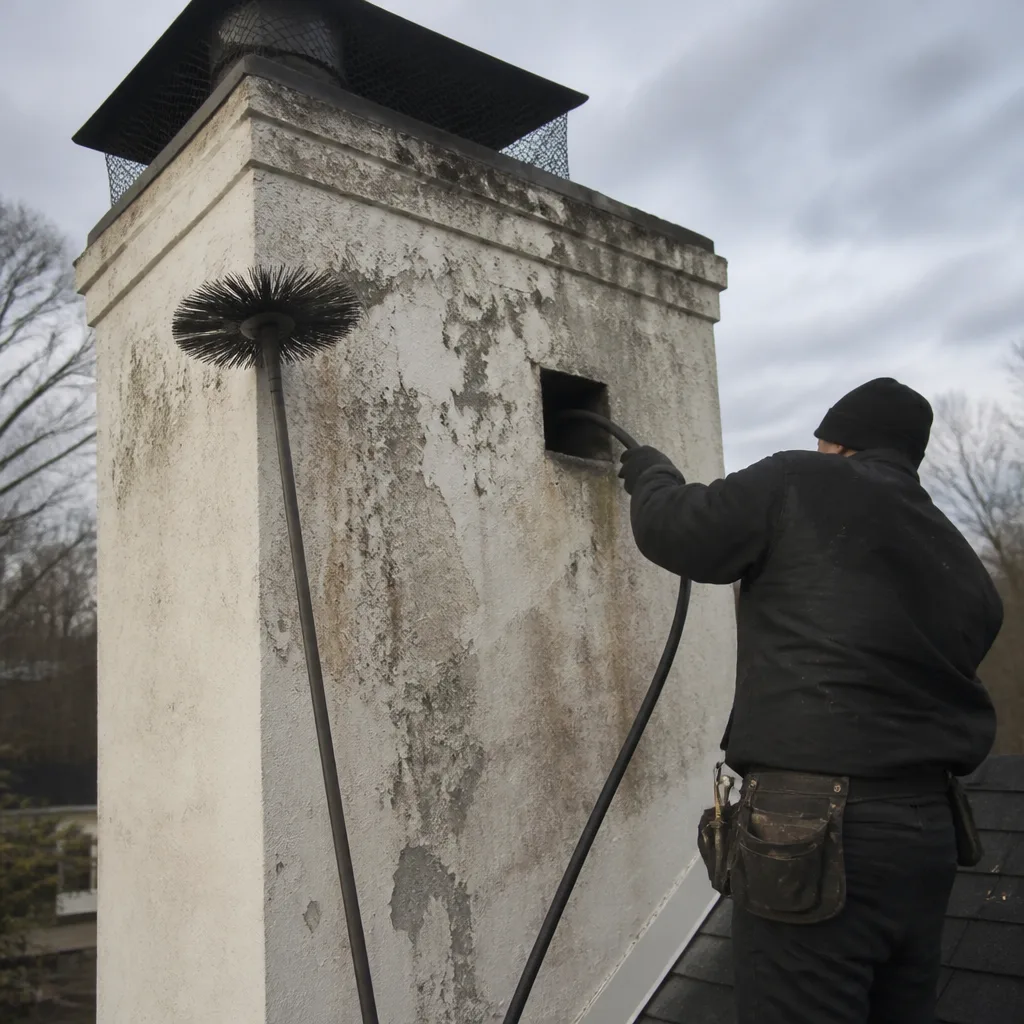 Before
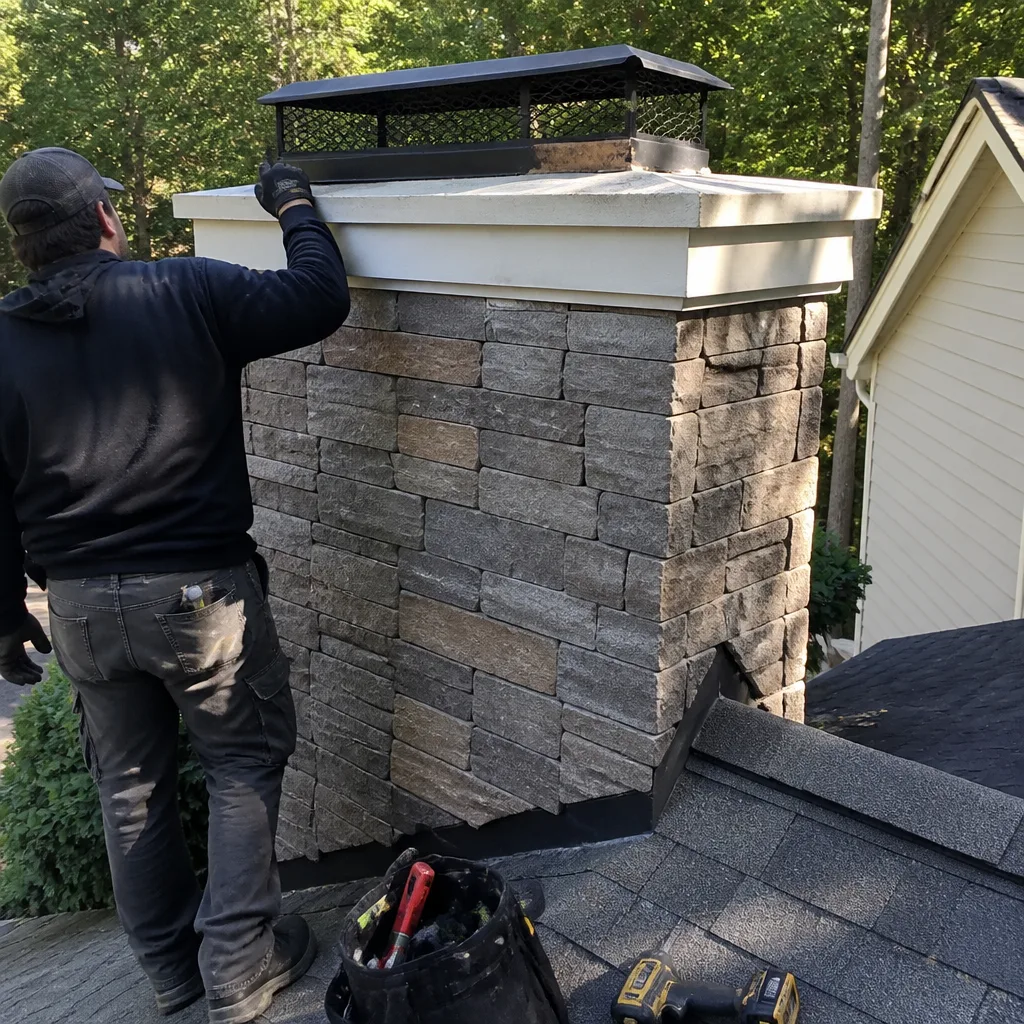 After
After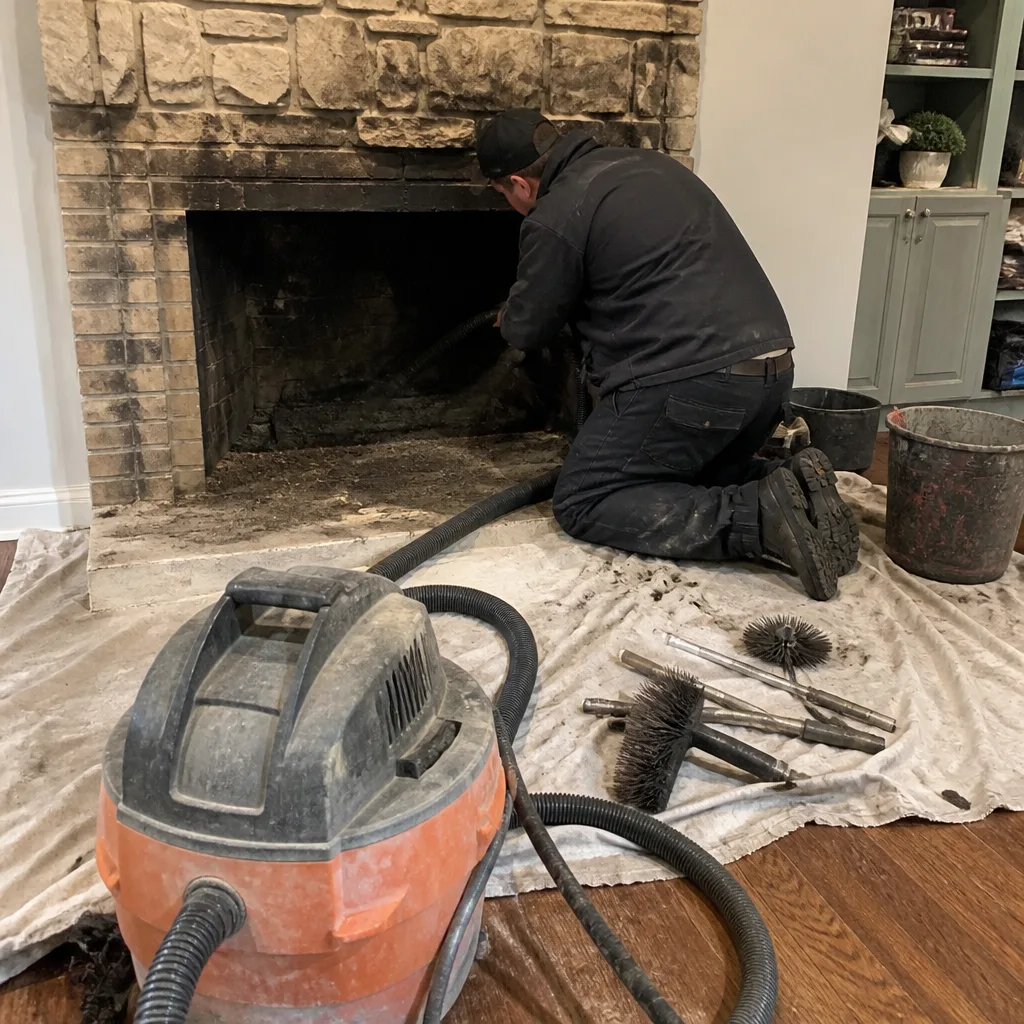 Before
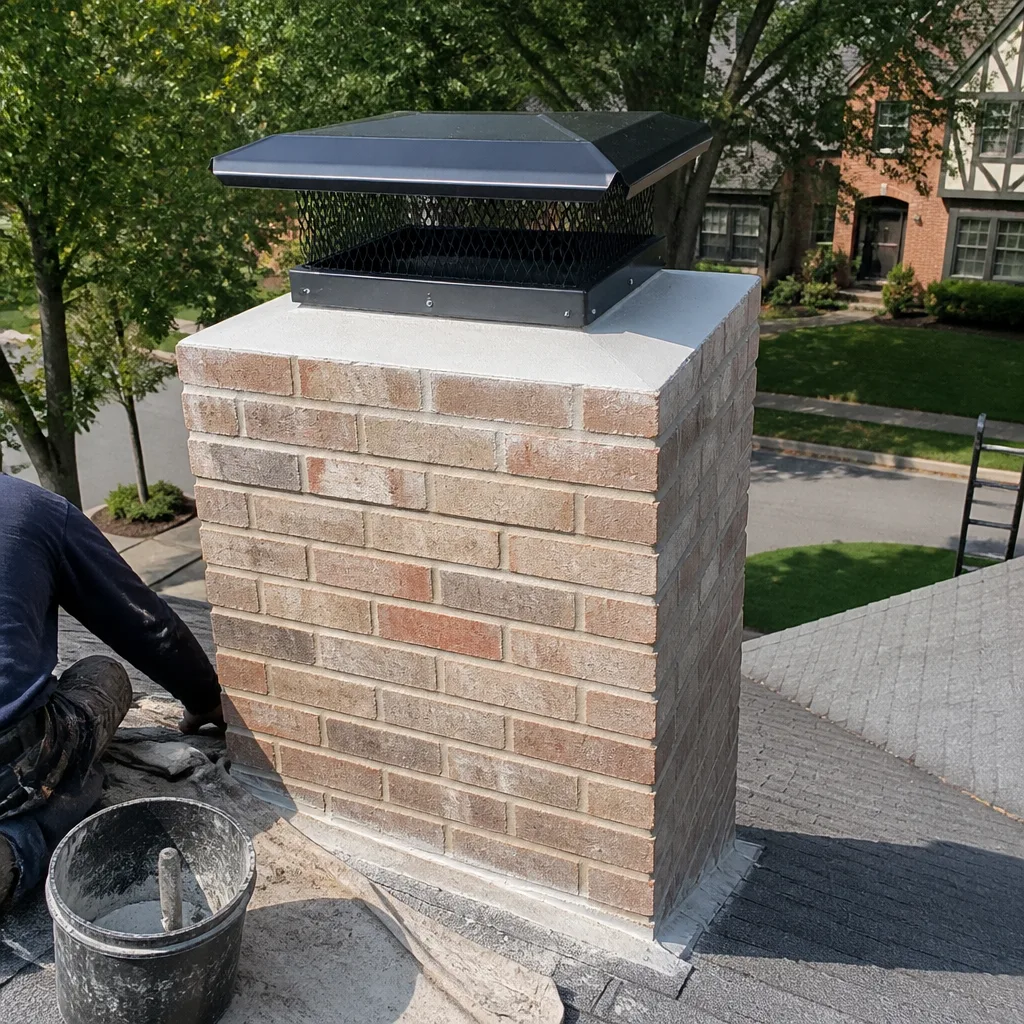 After
After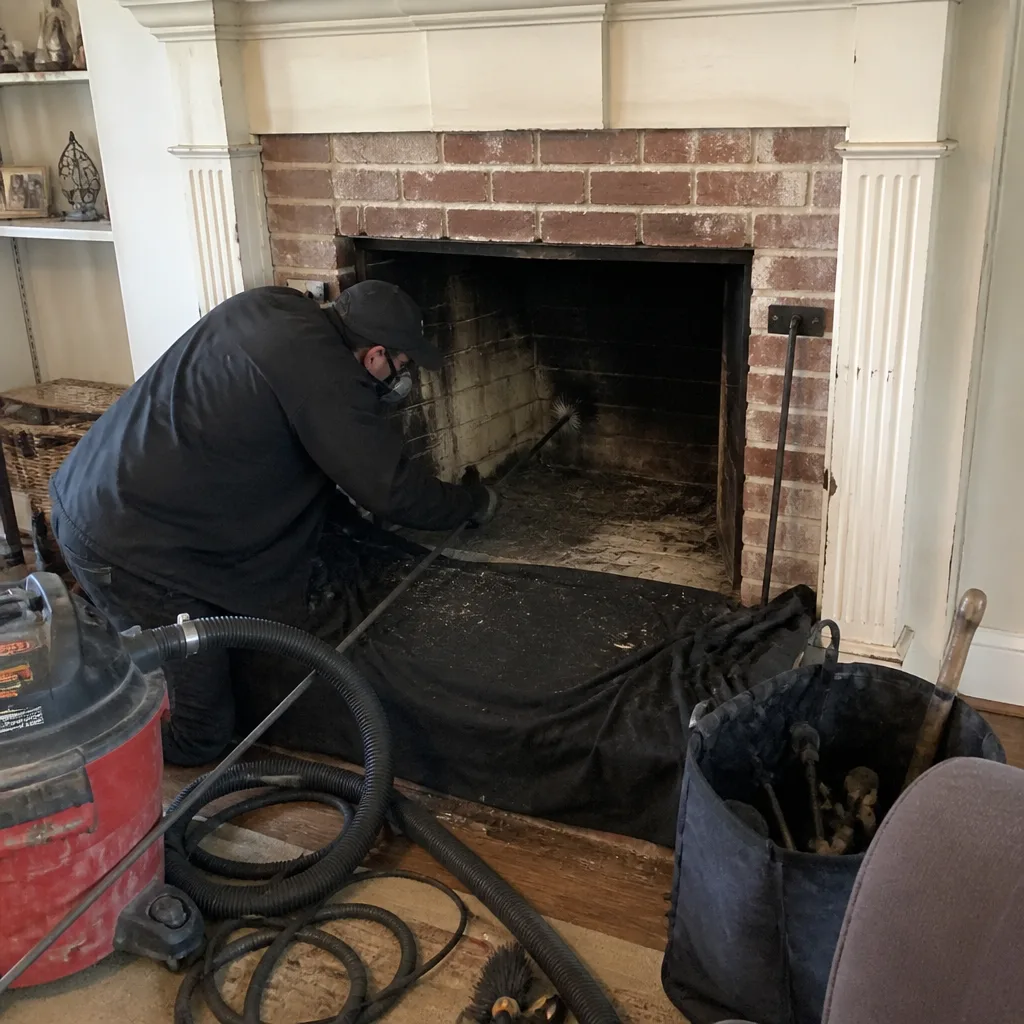 Before
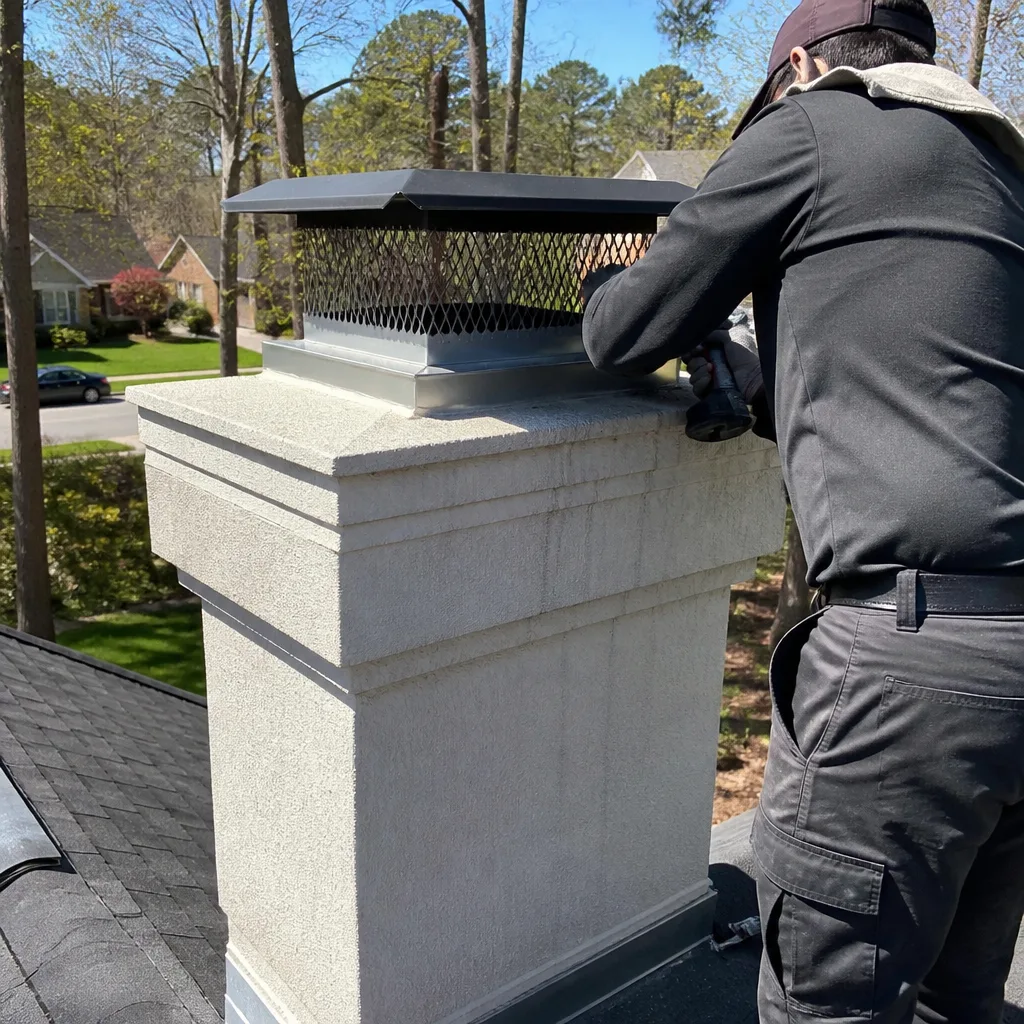 After
AfterWhen to Call a Professional
Call a professional when any of these applies: your chimney is a factory-built or gas system, your home has two stories, you’ve found Stage 2 or 3 creosote, you can’t safely access your roof, it’s been over 12 months since the last cleaning, or you want documentation that stands up to an insurance claim. Those conditions cover most Alpharetta homes. Flint Chimney Co Alpharetta offers free estimates throughout Alpharetta and the surrounding north Fulton County area. Call (762) 600-1468 and we’ll get you on the schedule with a written price before any work begins. Our team is part of the Garrison Partners family, founded in 2002, and every tech who walks through your door is background-checked and uniformed. You’ll know exactly who’s at your house and what you’re paying before any tool comes off the truck.
Frequently Asked Questions
A standard chimney sweep in Alpharetta typically costs between $189 and $329 for a single-flue wood-burning fireplace. Gas log systems and zero-clearance fireplaces may fall in a different range depending on the access and component removal required. For full pricing details, see our Chimney Cleaning Cost Breakdown: The Alpharetta Homeowner’s Reference for 2026. Every job at Flint Chimney Co Alpharetta gets a written price before work starts, so you’ll never see a different number on the invoice than the one you approved. Call (762) 600-1468 for a free estimate.
Annual cleaning is the baseline recommendation, but Alpharetta’s humidity means wood-burning fireplaces used more than a few times per season may need attention more frequently. The rule is simple: if you burn wood, sweep once a year at minimum. If you burn more than a cord per season or notice a strong odor when the fireplace isn’t in use, schedule it sooner.
DIY chimney cleaning is physically safe for a single-story home with a walkable roof, a wood-burning masonry fireplace, and confirmed Stage 1 creosote. It becomes unsafe when the roof pitch is steep, the flue is two stories tall, or the creosote has hardened into Stage 2 or 3. The equipment and access requirements change at each stage.
Chimney cleaning logs release chemicals that loosen creosote from flue walls so it falls into the firebox. They do not clean the flue. They may help with light Stage 1 creosote, but they are not a replacement for mechanical brushing and inspection. If you rely on cleaning logs alone, creosote continues to build in the smoke chamber and on the flue walls.
Creosote builds up, airflow narrows, and the chimney drafts poorly. In the short term, you get smoke backing up into the room and a persistent odor. Over time, the creosote reaches a thickness where a single hot fire can ignite it into a chimney fire. Chimney fires can crack flue liners, spread to the roof structure, and in the worst cases, burn the house down. The risk is avoidable with an annual professional sweep.
Most Georgia homeowners policies cover chimney fire damage if the homeowner can show the chimney was properly maintained. That almost always means a professional cleaning record from the prior 12 months. For additional guidance, explore our more guides & resources on chimney maintenance and safety. Without that record, the claim is frequently denied or reduced because the fire is classified as a preventable maintenance failure. A written inspection report from a professional sweep is the documentation the adjuster wants to see.
Yes. A standard home inspection in Alpharetta includes a visual chimney check, but it does not include a full flue-level inspection with a camera. We recommend a dedicated chimney inspection before closing on any Alpharetta home with a fireplace. The camera shows cracked tile liners, damaged smoke chambers, and hidden creosote that a visual inspection from the roof cannot see.
The Bottom Line
The DIY vs professional decision is not a question of skill or courage. It’s a question of the specific variables: chimney type, flue height, creosote stage, roof safety, and insurance documentation. For a narrow set of Alpharetta homeowners, the $80 kit and a Saturday afternoon make sense. For everyone else, the professional sweep is the lower-total-cost option the moment you factor in the mandatory follow-up inspection, the insurance record requirement, and the surfaces a rod kit cannot reach. The safest call is the informed one. If you’re not sure where your chimney falls, Flint Chimney Co Alpharetta offers free estimates and a written price before any work begins. Call (762) 600-1468 and get a straight answer.
Written by Hank Delano, Owner at Flint Chimney Co Alpharetta, serving Alpharetta since 2002.